

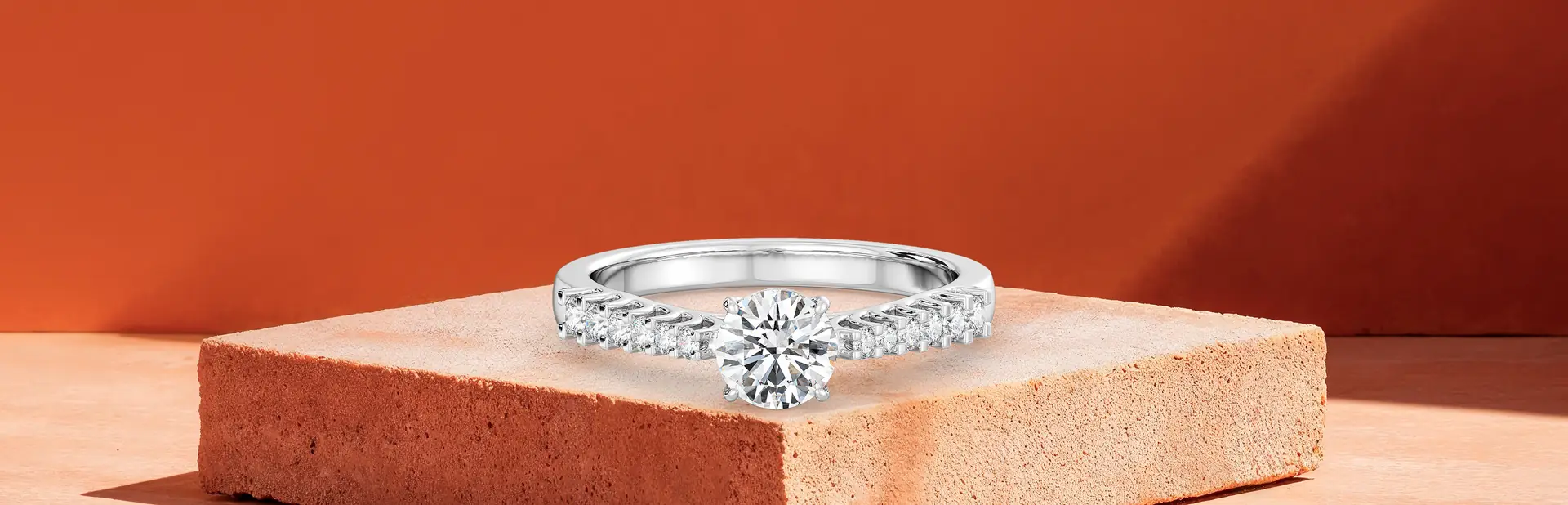
Choosing a Solitaire ring for your wedding involves more than selecting a diamond that catches your eye. As a bride-to-be, consider the diamond's shape, carat weight, cut, colour and clarity, along with the setting, gold purity, ring size, comfort and how it fits your daily lifestyle. At Svaraa, Solitaire rings feature at least one diamond weighing above 0.20 carats, even when the design includes additional diamonds.
This blog explores what to look for when choosing a solitaire ring from Svaraa, including diamond specifications, ring settings, and practical considerations for everyday wear.
Why Consider a Lab Grown Solitaire Ring for Your Engagement?
Although mined and lab grown diamonds share identical properties and appearance, they aren't similarly priced.
This means that for a smaller budget, you get to explore ring designs that would otherwise be out of range if you were shopping for mined diamond jewellery.
It also gives you more scope to discover designs that appropriately match your personal style and jewellery preferences.
What Should a Bride Look for in a Solitaire Ring?
While exploring solitaire rings at Svaraa, higher priority should be placed on these specific characteristics to ensure you get the best ring for your budget.
1. Budget
Setting a budget from the start allows you to explore designs that fit it right away, saving you time on irrelevant products that exceed it.
2. Cut
A diamond cut describes light performance and the diamond's proportions. Carefully select a diamond cut as it can influence fire and brilliance.
3. Colour
Diamonds aren't always colourless, and their colour can also be used as a grading factor.
According to the Diamond & Gem Laboratories of America (DGLA), stones are graded and given an alphabetic grading that ranges from D (Colourless) to Z (Tinted Colour).
4. Carat Weight
Diamond weight is measured in a special unit known as 'carats'. One carat equals approximately 200 milligrams, and carat weight affects a diamond's price.
5. Clarity
Diamond clarity is graded based on the presence of external blemishes and internal inclusions. Based on the number of these imperfections, diamonds are graded from:
FL: No inclusions and blemishes visible under 10x magnification.
IF: No inclusions visible under 10x magnification.
VVS1/VVS2: Inclusions are so slight and difficult for a skilled grader to see, even under 10x magnification.
VS1/VS2: Inclusions are visible with effort under 10x magnification but are considered minor.
SI1: Inclusions are noticeable under 10x magnification.
SI2: Inclusions are noticeable under 10x magnification.
6. Diamond Shape
The diamond shape describes the diamond's outline. Classic shapes include round and oval, while fancy shapes include princess, heart, and baguette, among others.
7. Ring Size
If it is your first time buying a ring from Svaraa, check the Ring Size Guide to gain a clearer idea about the brand's sizing.
Which Solitaire Ring Setting Suits Your Lifestyle?
Setting | Setting Description | Advantages | Disadvantages | Ideal For |
Prong Setting | Single or double metal claws hold the stone from various angles or corners. | A prong setting looks appealing and doesn't cover much of the stone. | Prongs can get caught in hair and clothing and may be prone to wearing with regular use. | Brides with a ring design that features a larger diamond or a classic shaped stone. |
Bezel | A metal strip surrounds the diamond completely or partially. | The smooth rim can offer more comfort as the chances of snagging are reduced. | Dirt and oil can accumulate between the bezel and stone, prompting regular cleaning. | Brides who want more stone protection and less chances of getting their ring stuck on clothing. |
Low-Profiles (Includes settings such as flush, bezel, and low prongs) | A combination of settings wherein the diamond is held close to or flush with the finger. | Low profiles can reduce the chances of the ring snagging on clothing; it can also be more appropriate for daily wear. | They may affect how easily the stone can be seen. | Brides who prefer the stone sitting closer to the finger or want a lower height profile. |
Choosing the Right Gold Colour and Purity
Gold finish can affect the ring's appearance, so choose carefully to match your fiancé's preferences. Metal purity also affects the ring's durability and individual properties.
White Gold
These rings feature a white lustre that is created by a Rhodium coating. This coating matches the diamond's colourless sparkle, creating a uniform appeal.
Yellow Gold
This is the traditional tone of gold and creates an appealing contrast against the colourless diamonds in the design.
Rose Gold
This warm tone features a pinkish hue that can be enhanced by the diamonds featured in the design.
9 Karat Gold
This purity of gold features 37.5% gold, while the rest of the composition comprises varying percentages of silver and copper.
14 Karat Gold
This gold purity is composed of approximately 58.3% gold, and the rest is composed of copper and silver.
18 Karat Gold
This purity contains a higher percentage of gold and is 75% pure gold, while the rest is made up of silver and copper.
Will Your Solitaire Ring Pair with Your Wedding Band?
If your bride-to-be wants to pair her wedding band and engagement ring, you'll need to have a clear idea of what the band will look like.
Consider whether she'll want to create a ring stack with the rings and determine whether the two rings can:
Stack correctly together.
Be comfortably worn together.
Have matching height so both are visible.
What Should You Check Before Buying?
Once you've narrowed down your options, pick the 'best' one that suits all the following requirements.
1. Certified Diamond Grading
Enquire whether the piece comes with a certificate to prove the diamond and metal properties are genuine.
Diamond details included in jewellery certification of a bridal engagement ring are:
Cut
Shape
Colour
Carat weight
Certificate number (for verifying details on the issuer’s website)
Description of the jewellery item
2. Metal Hallmarking
Products are hallmarked to state the purity of the metal used to make them. This includes a process where the products are engraved with a small number, such as:
9Kt: 375
14Kt: 583 or sometimes 585
18Kt: 750
3. Ring Sizing
To avoid any sizing issues on the special day, checking the size before buying a diamond ring is important. Apart from using an existing ring size number, you can refer to the ring size guide or have your bride-to-be visit a Svaraa store for free ring sizing.
4. Product Specifications
Checking the product specifications before purchasing it provides insight into its exact proportions and other details you may have missed while looking at the design.
Go over the product specifications one more time to ensure you haven't missed anything. Look at other details such as:
Metal purity
Metal weight and product weight
Setting style
5. Resizing Options
Before selecting a bridal solitaire ring, enquire whether the design can be resized if needed later. Certain pavé designs along the band may make it difficult or even impossible to resize the ring.
6. Delivery Timelines
If you want to get the solitaire ring by a particular date, check the estimated delivery date to ensure it arrives on time. If there's a delivery time tracker, enter your pincode to check when the product will arrive.
7. Return/Exchange Policies
Before making your purchase final, check the buyback and exchange policies. Check all the terms and conditions that apply and ensure you understand them well before committing to a purchase.
Final Thoughts
Various factors need to be considered before buying a solitaire bridal ring from Svaraa. Beyond the different definitions of 'solitaires,' consider the diamond's properties, setting, metal purity, and finish.
Use these markers and balance diamond specifications, comfort, and style to find a bridal solitaire ring from Svaraa that suits your preferences and lifestyle.
FAQs
Which solitaire ring design should I choose for my engagement?
When comparing solitaire ring styles, consider the diamond shape, setting, gold purity and finish, and budget. Compare designs based on the diamond specifications and overall construction to find a ring that fulfils all your preferences.
Are lab grown diamonds suitable for bridal and engagement rings?
Yes, lab grown diamonds are suitable for engagement and bridal rings because you can't distinguish them from mined diamonds by visual appearance alone. They share an identical chemical composition and crystal structure, but their origins differ.
What should I consider when buying a bridal lab grown diamond ring?
When buying a lab grown diamond bridal ring, consider the setting, diamond shape, clarity, cut, colour, gold purity, and product dimensions. Also review other factors, such as diamond certification and post-purchase policies, before buying.
Can I wear a bridal solitaire ring every day?
A solitaire ring may be suitable for daily wear depending on its design, setting, dimensions, and overall construction.