

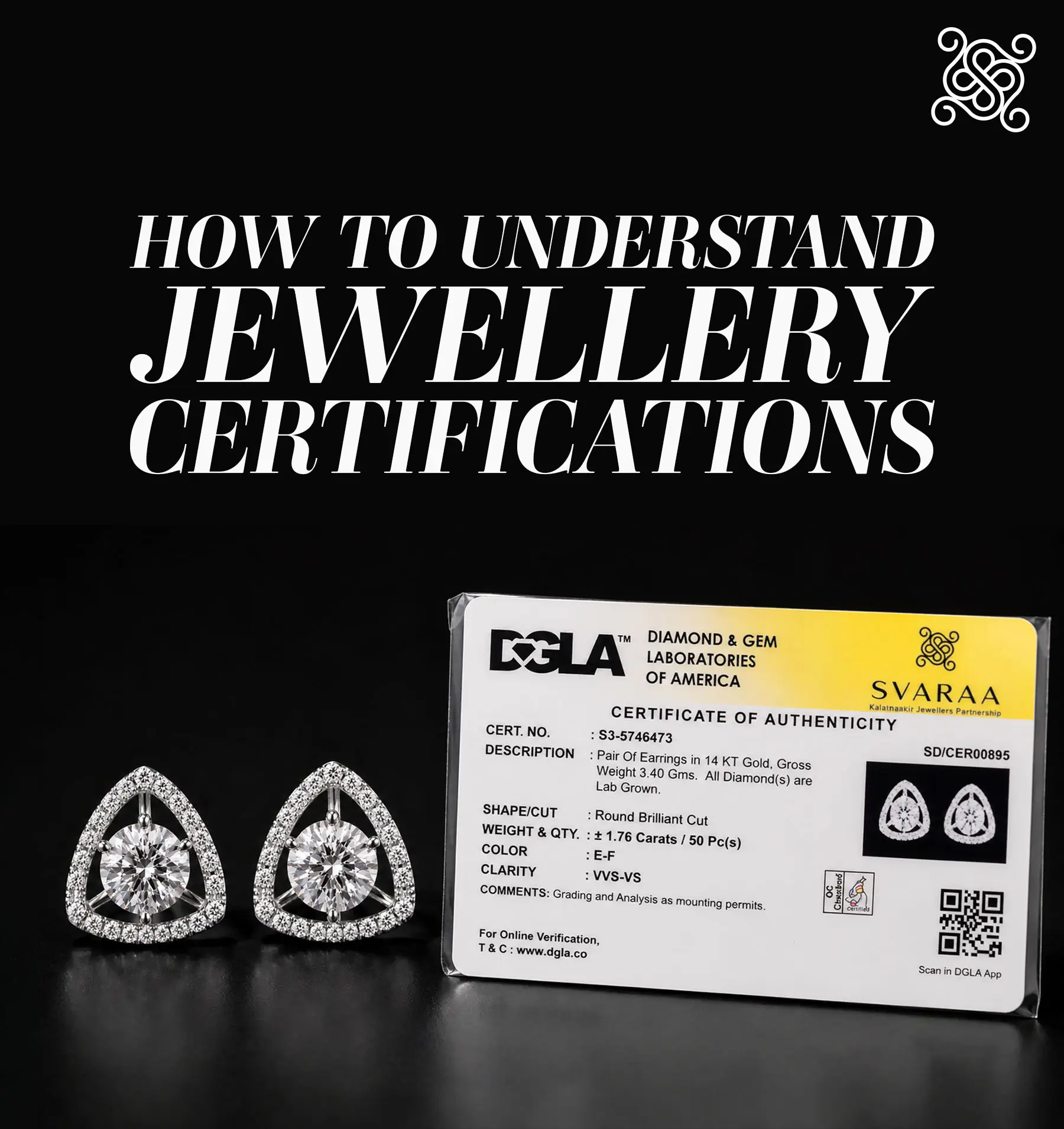
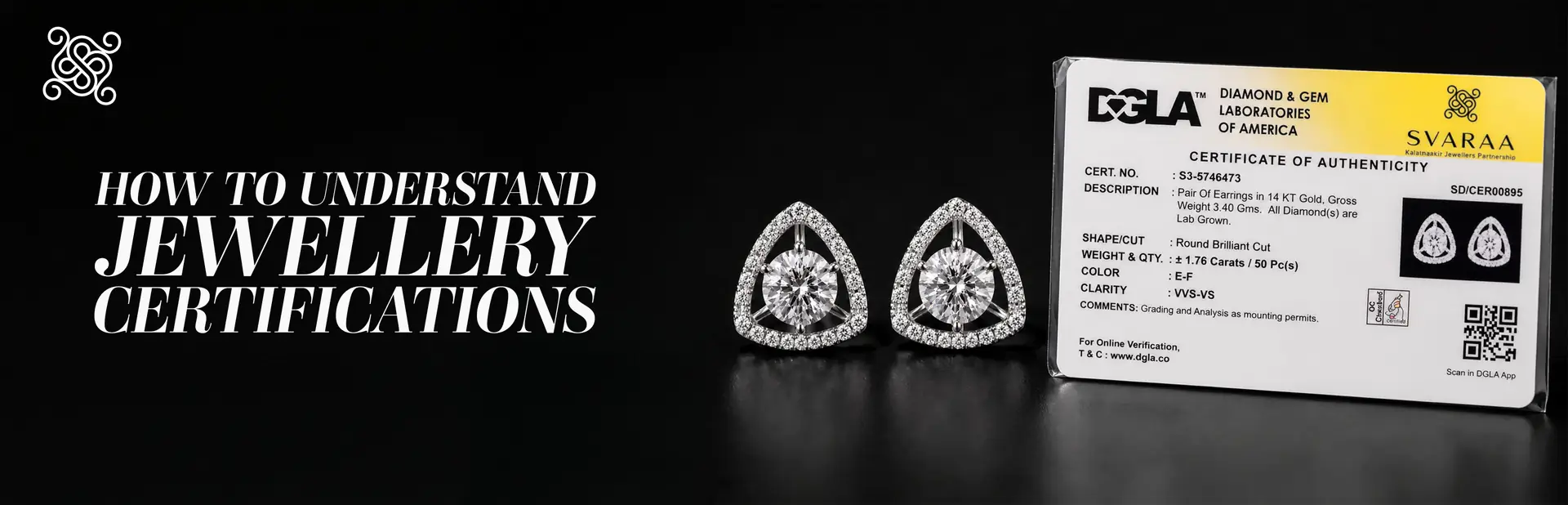
Most jewellery shops boast of offering jewellery certifications on all their products. However, these ‘certifications’ don’t appeal to customers who don’t know what they are and why they are necessary. This creates the need to clearly explain what jewellery certification is and how to understand it when looking to buy the best men’s or women’s jewellery. Whether it is gold or diamond jewellery, or a mixture of both, certification and grading are mandatory.
This guide will explain jewellery certifications and look at why they should be an influential factor when buying gold and certified diamond jewellery.
What is Jewellery Certification?
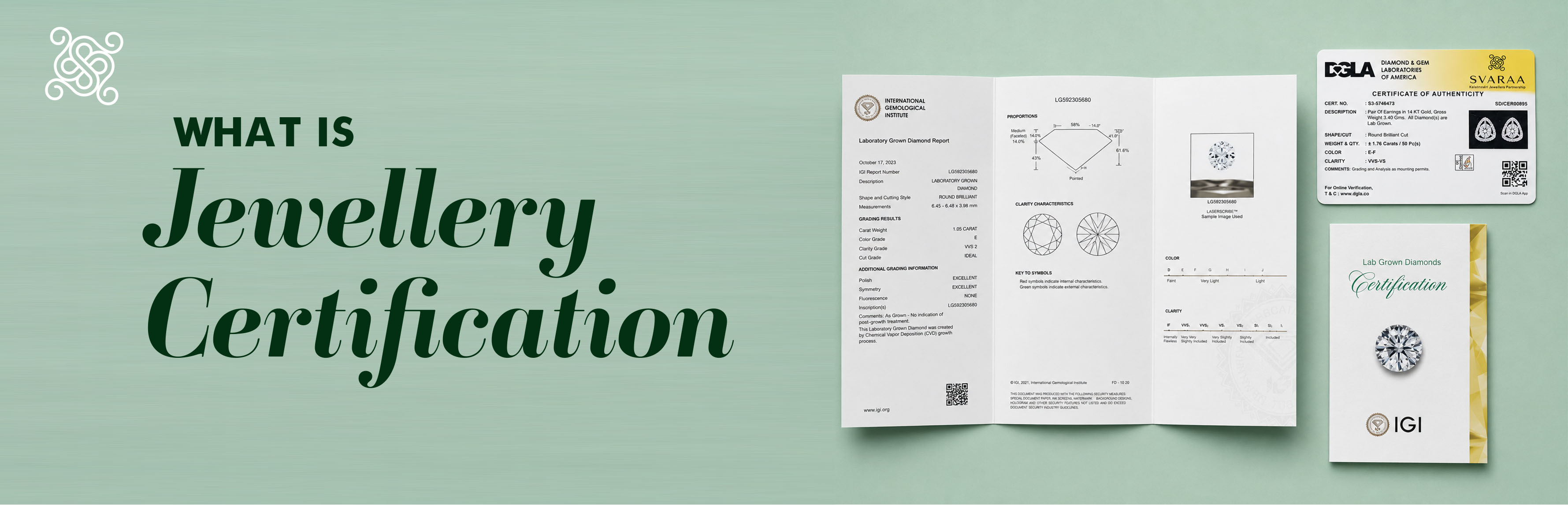
Jewellery certifications are an assurance of the quality and purity of metal and the grade of a gemstone or diamond. Provided by established and proven organisations, these cards or booklets are proof of certification.
Some certifications come in the form of a physical booklet, a card, or an engraving on the jewellery item itself. They are mainly put into two groups based on the material: metal or diamond/gemstone.
Gold Jewellery Certification
All types of jewellery, especially gold jewellery, are certified by none other than the Bureau of Indian Standards (BIS), a prestigious organisation that manages the purity and quality analysis of metals such as gold, silver, and platinum.
1. BIS Hallmarking
The metal jewellery made from BIS-certified metal has an engraving somewhere, usually on the inside of the jewellery items. The certifications on these types of metals provide the following:
2. Purity Assurance
The purity of metal jewellery, such as gold, is usually inscribed using a laser and usually mentions the fineness of the metal. BIS hallmarking engraving for gold purity appears as this:
22 Karat gold - 22K916
18 Karat gold - 18K750
14 Karat gold - 14K585
9 Karat gold - 9K375
For jewellery made of silver metal, the engraving goes according to purity as well, and appears as "925”, indicating 92.5% pure silver.
3. HUID (Hallmark Unique Identification) Number
Certified jewellery that features BIS certification usually comes with a Hallmark Unique Identification (HUID)
Diamond Jewellery Certification
All certified diamonds are done so by the International Gemmological Institute (IGI) or Diamond & Gem Laboratories of America (DGLA). These certifications are essential if you want to be guaranteed of diamond quality.
IGI certification appears in the form of a paper or cardboard-based booklet, while DGLA certification appears as a PVC card.
1.IGI - International Gemmological Institute
Considered the largest and most esteemed organisation for diamond certification, IGI certified diamonds are the most trusted across the globe as well as within India. On these booklets are crucial details pertaining to the jewellery, such as:
Diamond grading report (cut, clarity, colour, carat)
Report number
Date of report
Dimensions
Description
Image of diamond proportions
The IGI remains a top certification board for natural and lab grown diamonds, grading them both on the same standards, but clearly stating their source on the certificate.
2. DGLA - Diamond & Gem Laboratories of America
The DGLA is a certified gemstone grading organisation, including diamonds and coloured diamonds, and is a top regional grading organisation. Their certification is not as in-depth as the one from IGI, but it still gives the following details:
Diamond grading report (cut, clarity, colour, and carat)
Certificate number
Description
Image of jewellery item/diamond
Although mostly dealing in mined diamonds, DGLA is an integral part of the jewellery industry in India, particularly those dealing in a mixture of lab grown and mined diamonds for jewellery.
Decoding the 4Cs in Jewellery Certification
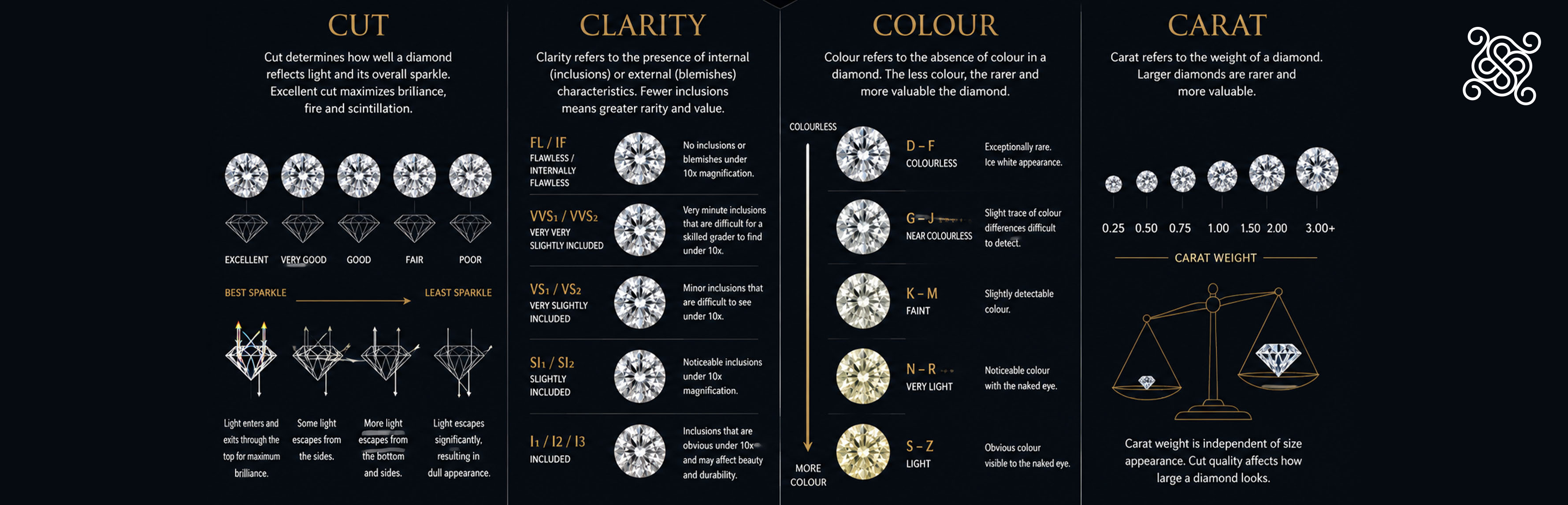
When it comes to jewellery, particularly diamond jewellery, the “4 Cs” are critical for analysing and grading a diamond, and assessing its suitability for jewellery making.
1. Diamond Cut
The word ‘cut’ in diamond terminology simply means shape! There are over a dozen diamond cuts, and while some are more traditional, others are a modification of these traditional cuts.
For mined or certified lab grown diamonds, certifying boards often look at them from two perspectives: diamond cut grade and diamond cut shape/style.
Diamond Cut Grade
This rates the way in which the diamond has been polished and its light performance based on its new proportions.
Cut Grade | Description |
Excellent | Optimal fire, brilliance, sparkle |
Very Good | Appropriate light returns |
Good | Good sparkle with fair light performance |
Fair | Leakages in light and lower brilliance |
Poor | Considerable light loss and dullness |
Diamond Cut Shape
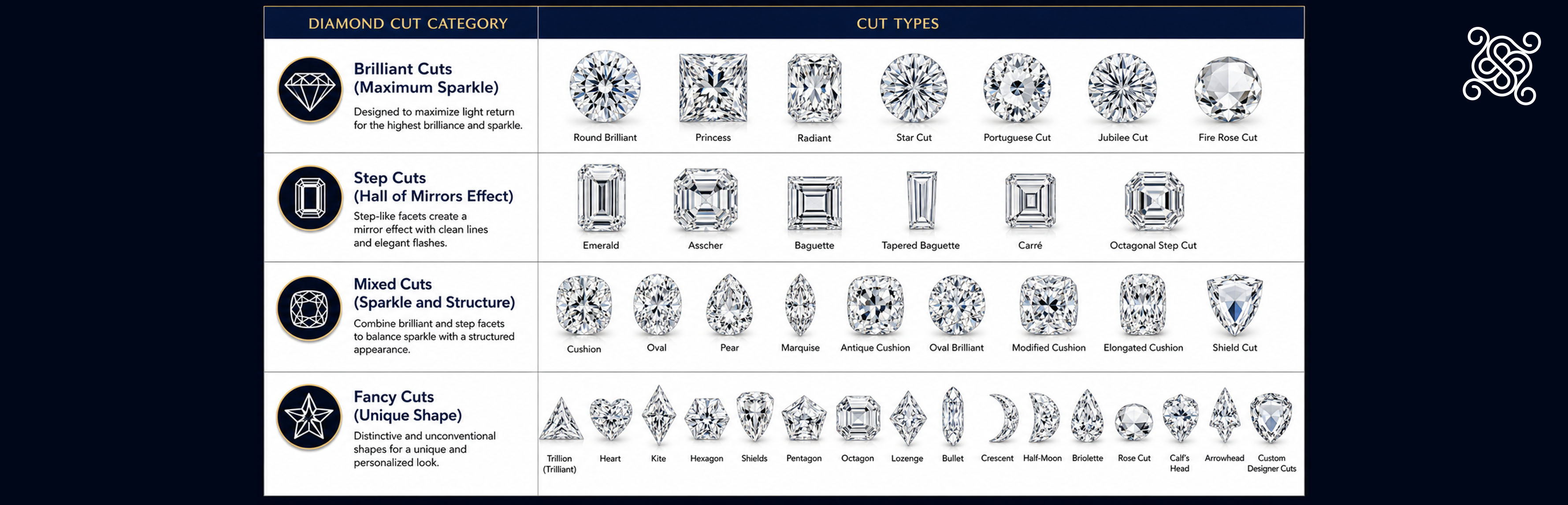
This refers to the diamond’s shape, and particularly its facet arrangement. Diamond cut type is always included in the documentation for certified lab grown diamonds.
Brilliant Cuts
The “brilliant” cut diamonds are designed to maximise the return of light, creating an undeniably different sparkle, fire, and scintillation. Although the round brilliant cut diamond is the most renowned, these cuts can have
Steps Cuts
Step cut diamonds replace the intense sparkle with a sophisticated illusionary “hall of mirrors” effect created by their parallel facets. Their lengthy, open-facet structure is their key highlight and makes for a clean, architectural aesthetic.
Mixed Cuts
These diamonds feature a cut that’s a fusion between brilliant and step-cut faceting that creates a neutral balance between shape, sparkle, and visual size appearance. They are appealing in engagement rings and fashion jewellery because of their brilliance and silhouettes.
Fancy Cuts
Typically, fancy cut diamonds are non-circular speciality diamonds that focus on individual preferences rather than design appeal. They range from romantic and geometrical shapes to custom-designed shapes.
2. Diamond Colour
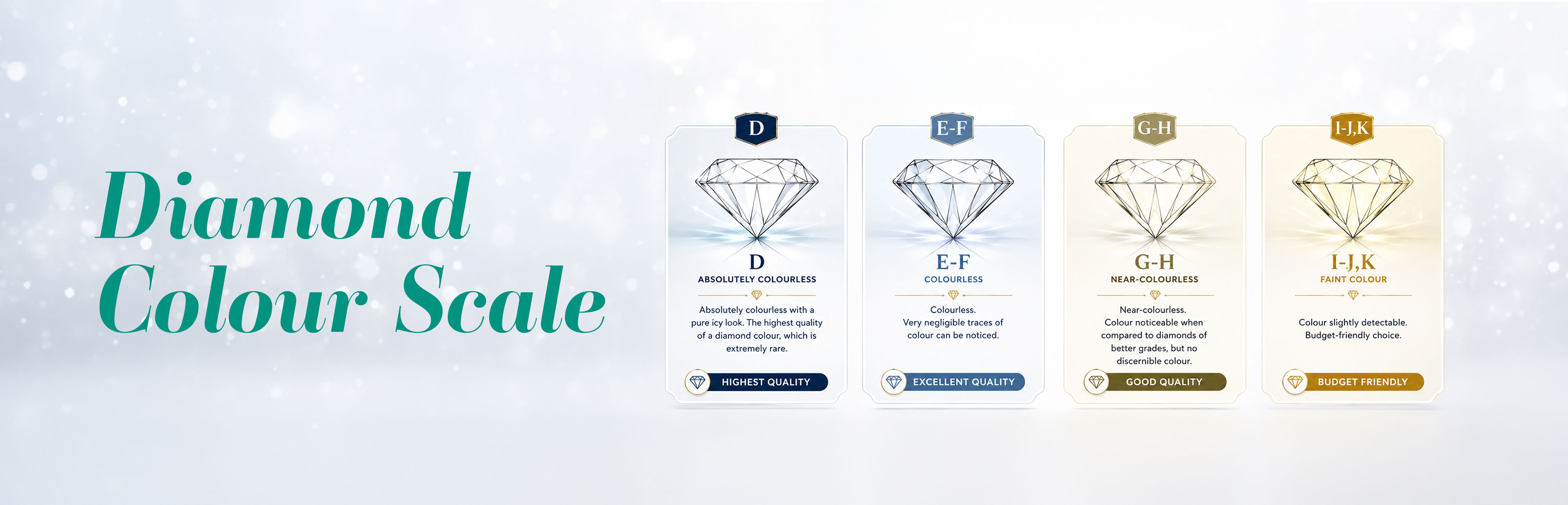
We often think diamonds are colourless, because that’s what we see when looking at diamond rings or other types of diamond jewellery. The truth is that diamonds, mined or lab grown, can have colour.
Understandably, you can understand why the presence of faint colour isn’t desirable. This makes diamond grading based on colour a crucial element of IGI certification for jewellery.
The best quality diamonds are colourless, while the poorest are those with a detectable colour.
3. Diamond Clarity
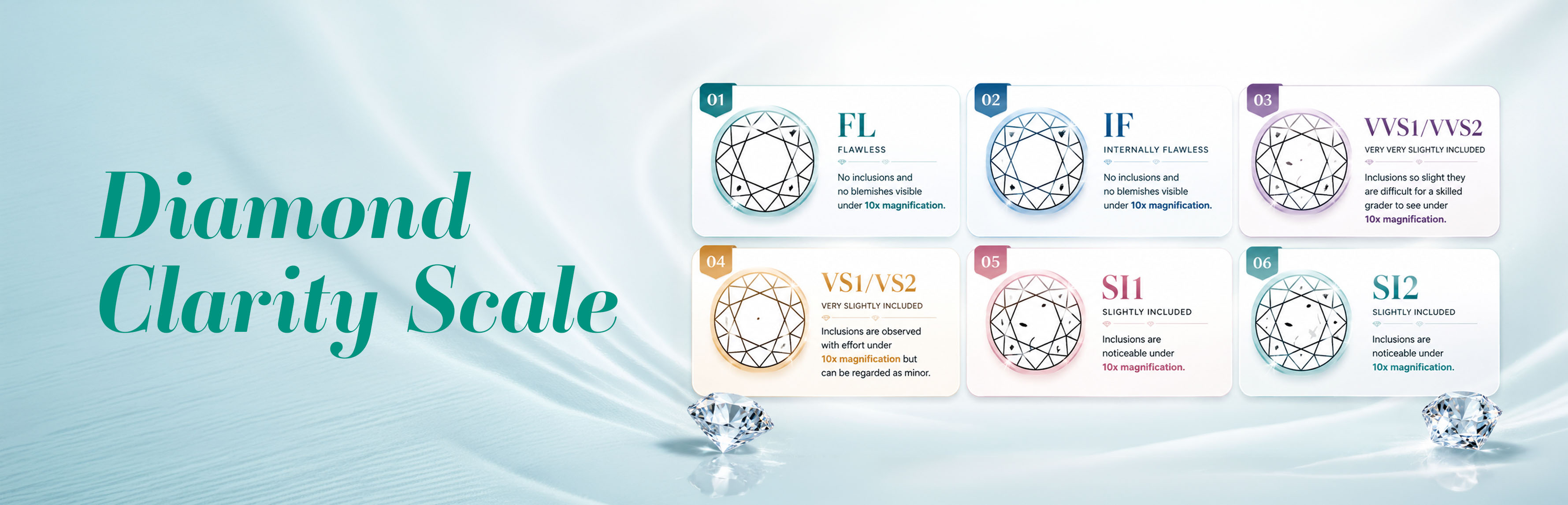
A diamond’s clarity refers to the defects or flaws visible when viewed under a microscope at 10X. These could be seen as defects on the surface (blemishes) or internal defects, formally known as inclusions.
Most inclusions are either formed by solids, liquids, or gases which are trapped within the diamond as it forms. Blemishes which are surface-bound, and can include nicks, chips, polish lines, and abrasions.
4. Diamond Carat
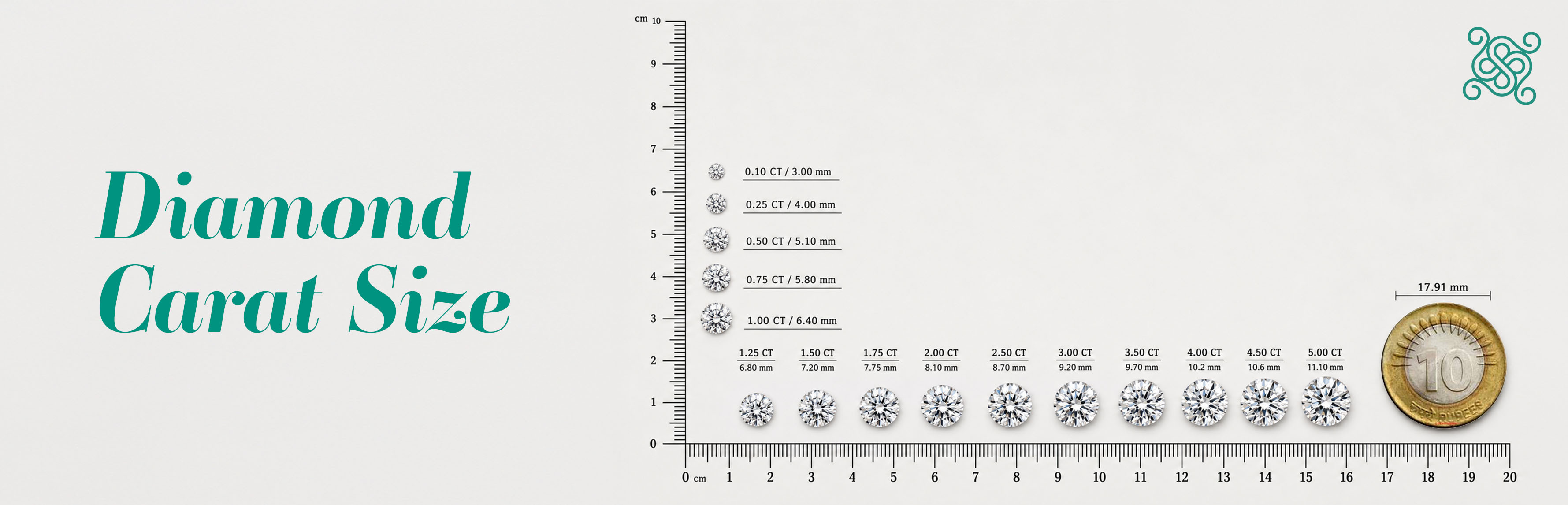
The word ‘carat’ refers to the diamond’s weight. For jewellery containing several diamonds, the cumulative carat weight is placed on the jewellery certification document.
While they come in a variety of decimal values, experts adjudge them in increments of one.
NOTE: It’s important to note that size and carat value (weight) aren’t always proportional! That’s why elongated diamonds look larger than round-cut diamonds even if they are of identical weight.
Why Certification Is Crucial When Buying Jewellery Online
When buying jewellery in a store or on an online website, customers should maintain the same standards. You wouldn’t buy in a shop without certifications, so why would you online?
There are countless jewellery brands, and although they all sell appealing jewellery designs, ranging from diamond necklaces and chains to pendants, what sets them apart are the certifications.
Those offering a certification from a globally authorised body, such as IGI, are the most trustworthy and offer the best certified diamonds. Once you have the certificate, you still need to verify it!
How to Verify Jewellery Certification in India
Certifications can be handed out for metal jewellery and jewellery with diamonds or gemstones. The certifications are provided by different organisations and can therefore be checked separately.
Gold and Silver Jewellery
Precious metal jewellery features a BIS hallmark that comprises a 6-digit HUID code that can be used in the verification process, and here’s how:
Go to the Android Play or iOS app store and download the official BIS Care App.
Open this app after downloading it and select “Verify HUID”.
Look for the 6-digit code on your certificate or on your jewellery item and enter it into the box or scan the code.
If your jewellery is certified, the app will instantly display the details relating to the jeweller’s details and the hallmarking centre.
Diamond and Gemstone Jewellery
Certified diamonds used in jewellery all come with a certificate from the IGI or the DGLA. There are other diamond-certifying organisations, such as the GIA (Gemmological Institute of America), which follow strict guidelines for grading.
If you have an IGI jewellery certificate, here is the process to follow to verify the grading report:
Look for the report number, which is usually printed under the name “IGI Report Number”
Visit the IGI website and look for the “IGI Verify Your Report” page and either enter the code or scan the QR-based code.
Instantly, a digital report will appear, and you should compare it with your existing, physical certificate report to make sure they match.
Certification vs Warranty vs Guarantee: Know the Differences
The words certification, guarantee, and warranty may be used by jewellery frequently, but shouldn’t be confused when used interchangeably. They mean things very differently, and knowing what each one refers to is essential before making a jewellery purchase.
Feature
| Certification | Warranty | Guarantee |
Focus Area | Authenticity and valuation | Defects | Customer satisfaction and brand standards |
Provides | Independent and regional metal and diamond gemmologists | Jewellery brands | Jewellery brand or retailer |
Duration | Permanent (never expires) | Fixed period | Short-term |
Action | Verified jewellery characteristics and properties | Repair or replacement | Exchange or refund |
Diamond Certification Myths
Anyone who doesn’t buy jewellery often and doesn’t work in the diamond industry probably doesn’t know much about diamonds and jewellery, and is therefore prone to believing common myths.
Myth 1: All Diamond Certifications are Equal
This is a huge misconception, and the best certifications are the IGI and GIA certifications. These are the most reputable independent diamond certifiers, and their certificates are trusted as the best. You are better off buying jewellery from diamond jewellers who are certified by IGI and/or GIA.
Myth 2: Certificate = Good Investment
Certificates are different, and you shouldn’t trust every certificate, especially those that inflate diamond grades. Instead, seek prestigious certifications from IGI, GIA, and DGLA.
Myth 3: Lab Grown Diamonds Don’t Require Reports
The IGI grades both types of diamonds, mined and lab grown diamonds. Because of this, even lab grown diamond jewellery comes with a certificate from the IGI and other organisations such as DGLA.
Myth 4: Digital Certificates Are Fake
Not all digital certificates are fake, but when making a purchase, insist on getting a physical certificate. When you look to verify the certificate, you may be able to access the digital copy of the certificate, proving that digital certificates can be real.
Myth 5: A Certificate Guarantees Sparkle
Diamond jewellery certification cards are a physical verification of the diamond. That is, it states the diamond cut, clarity, colour, and carat values, proportions, and additional grading information. This card or booklet isn’t a guarantee or measure of the diamond’s sparkle.
Why Jewellery Certification Should Guide Your Choice
Buying jewellery made of pure metal and diamonds is an investment, one you want to last for a lifetime! This is why jewellery certifications should shape your buying decisions in a jewellery store.
Buying from an established brand usually ensures you are getting quality jewellery, but that isn’t the case. Sometimes, customers are misled by jewellery brand names and forget to ask about certifications.
Irrespective of the brand you are buying from, always ask about certifications before buying!
End Note
If you’ve been saving up to buy yourself some luxurious diamond jewellery, don’t cut yourself short by buying from an uncertified jeweller who doesn’t provide jewellery certification, that too from a trustworthy authority such as IGI, GIA, and DGLA.
Svaraa has been dealing in IGI and DGLA certified lab grown diamonds for several years and always gives a certificate with each piece of jewellery.
FAQs
What certifications should a jeweller have?
A jeweller selling diamond jewellery made from precious metal should ideally have BIS certification and diamond certification from IGI, GIA, or DGLA.
Which certificate is better, GIA or IGI?
Typically, these certifications are both very relevant, but the main difference is that IGI is better for certified lab grown diamonds and finished jewellery.
What is a quality certification mark for jewellery?
The quality certification mark appears as an engraving on the inside of jewellery and is made by the BIS to assure buyers of metal purity and quality.
What certifications does Svaraa offer?
Svaraa jewellery features DGLA and IGI certification that reassures customers of the quality standards the company holds itself to. The metal we use in our jewellery features BIS hallmarking.