

Cleaning lab grown diamond jewellery is simple. Lab grown and mined diamonds share the same chemical composition, crystal structure, and physical properties; hence, they need similar care. The best cleaning method depends on the setting, metal, gemstones, and diamonds.
This guide explains how to clean and store lab grown diamond jewellery safely, including cleaning mistakes to avoid.
Why Does Diamond Jewellery Care Matter?
Diamond jewellery, mined or lab-grown, can collect dirt and oil buildup. Continuous wearing, the environment, and skin characteristics contribute to this buildup.
Dirt can collect in the settings, reducing the diamond's appeal and, potentially, the piece as a whole.
This shows the importance of adequate lab grown diamond jewellery care when it comes to ensuring diamond jewellery maintains its appearance.
Timely professional jewellery care helps your diamond jewellery retain its appeal, but can also make you aware of structural issues in the jewellery such as:
Loose diamonds
Deformed prongs
Broken clasps/closures
How to Clean Lab Grown Diamond Jewellery
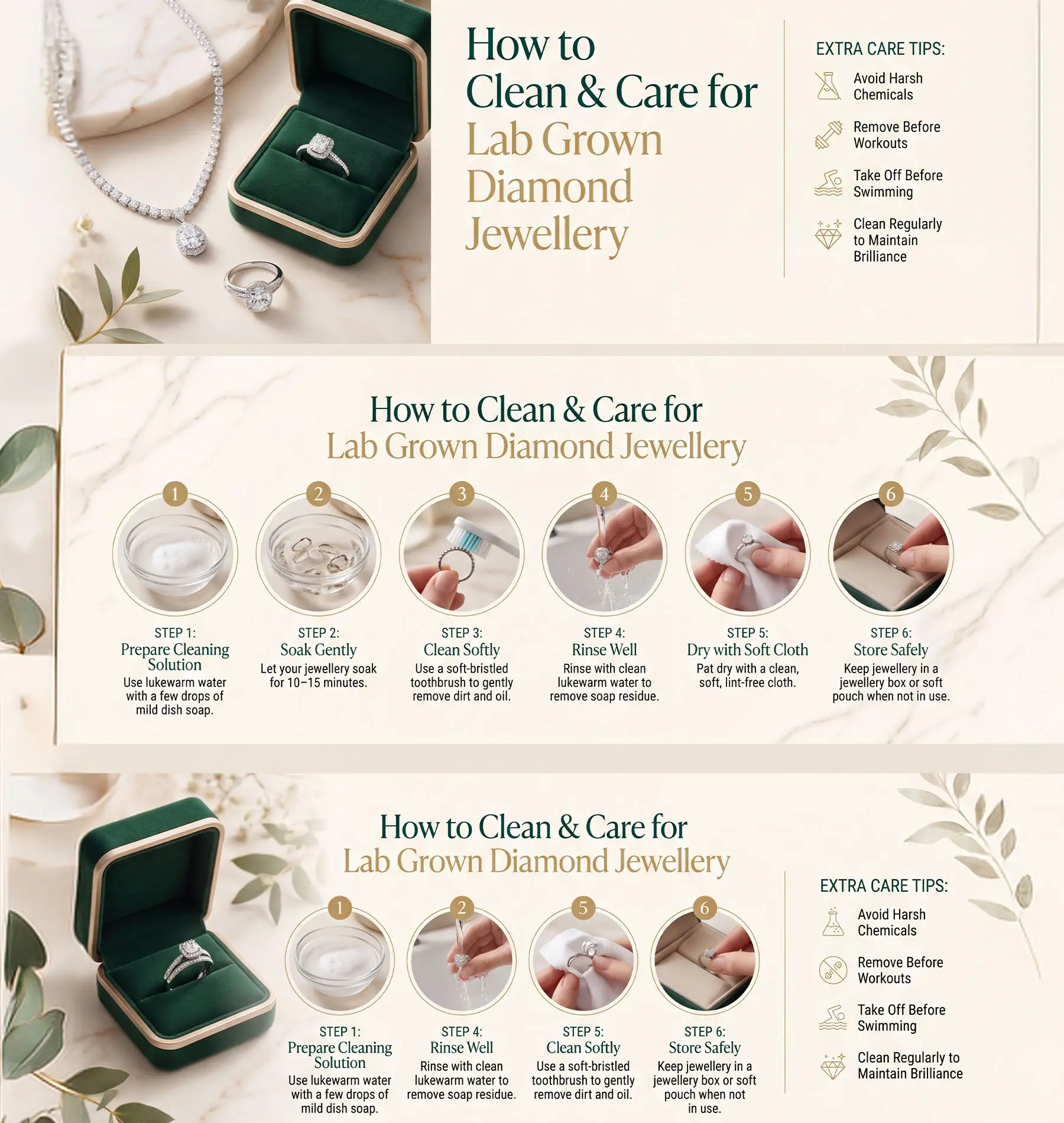
If you're wondering, "How to clean lab grown diamond jewellery?", you can do so with a few household items, including mild dishwashing liquid, warm water, a soft brush, and a lint-free drying cloth.
Soak the jewellery in the solution before using the soft bristles of the brush to remove softened dirt and oil. Rinse well and dry off each piece with a lint-free cloth.
Check Your Piece Before Cleaning
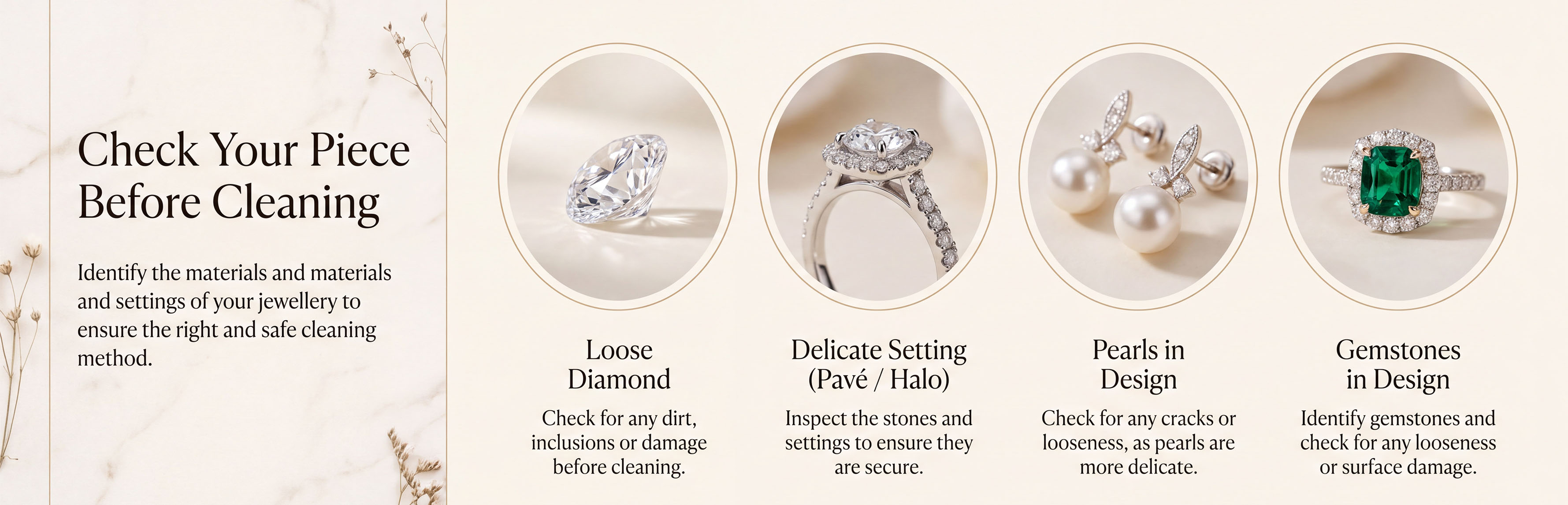
Not every diamond jewellery piece should be cleaned with the soaking and brushing method. Exceptions can be made in the following cases:
If a diamond looks or feels loose, avoid cleaning or wearing the jewellery, as handling it may dislodge the stone. Consult a professional jeweller.
The piece contains a delicate or intricate diamond setting such as a pavé or cluster design.
There are other materials in the design (pearls or gemstones) which can be sensitive to scrubbing or dishwashing liquid.
Pieces with plating, a matte finish, or an oxidised finish may be affected by brushing, which can damage the metal's condition or appearance.
In such cases, you may need professional advice on how to clean this diamond jewellery.
Quick Guide to Lab Grown Diamond Jewellery Care
Use this quick guide to care for your diamond jewellery in different situations.
Situation | Recommended Care Tip | Why it Matters |
Jewellery Appears Dull | Gently wipe down with appropriate cloth to remove dust and oils. | The build-up of residue can reduce diamond jewellery appearance. |
General Daily Wear Care | Consider if a clean or a wipe down is needed. | This will work to remove daily dirt and oil before it hardens. |
Just Before Storing | If cleaning your jewellery with water, ensure proper drying and store separately. | Helps to reduce scratches, tangles, and moisture-related issues. |
Before Travelling | Store jewellery separately and find a lockable box. | Prevents pieces rubbing together and loss or theft. |
After Contact with Cosmetics | Follow the recommended cleaning process for the piece. | Avoid using lotions, perfumes, and makeup while wearing jewellery as they can discolour metal. |
Before Swimming & Exercising | Remove jewellery and store it away safely. | Exposure to chemicals and moisture may alter your jewellery's appearance. |
If a Diamond Feels Loose | Stop wearing the jewellery and take it to an expert. | Continuing to wear jewellery with a loose diamond increases the risk of losing the stone. |
Occasional Deep Cleaning | Enquire about a professional clean and the suitable method. | Certain elements like diamond settings, clasps, gemstones may require extra care. |
How to Prevent Diamond Jewellery Damage
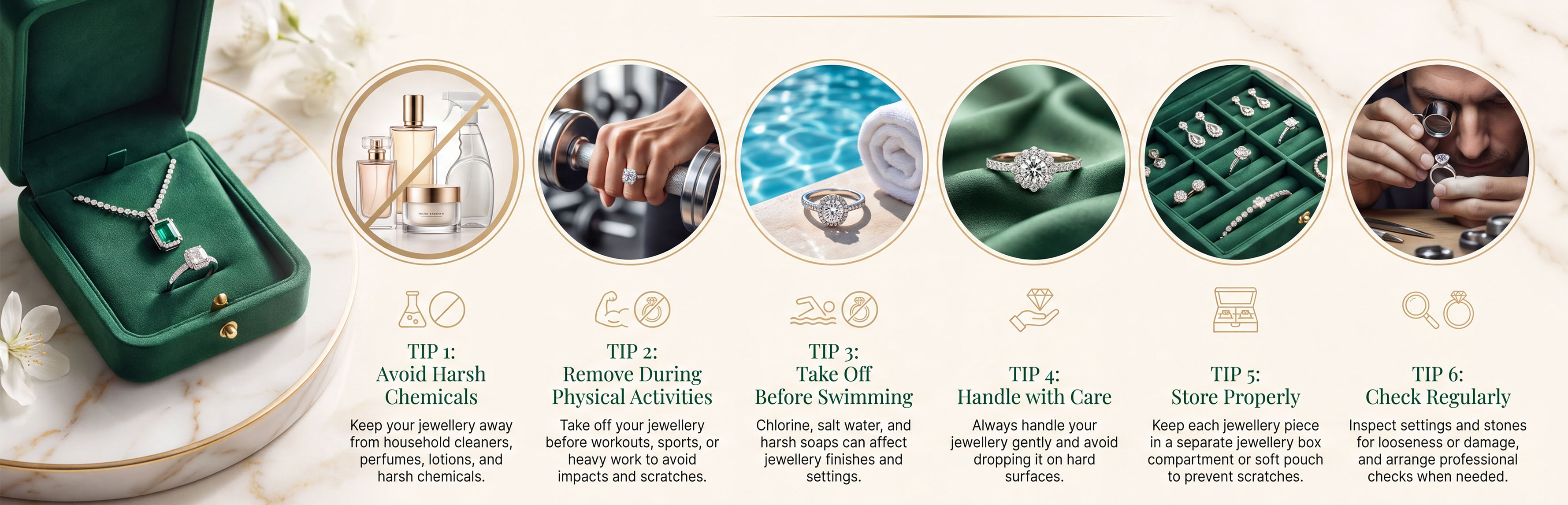
If you aren't a first-time jewellery owner, you may be aware that certain practices can damage your jewellery. You can follow these steps to reduce the damage to your lab grown diamond jewellery:
Store Pieces Separately
Jewellery items stored together in a small container can rub against other pieces and create scratches. To prevent this, store each piece in a specialised box or an individual compartment.
Keep it Away from Moisture
Consider where you will store your diamond jewellery, as moisture and chemicals can affect the metal's appearance.
Storage Box Material Matters
Soft fabrics and padding are less likely to scratch your jewellery than sharp, rough materials, so consider materials when choosing a jewellery storage box.
Apply Products Beforehand
Chemicals in lotion, perfume, and make-up can harm diamond jewellery, so consider when you apply them and whether you're wearing the jewellery while doing so.
Handle Jewellery Pieces with Care
Rough handling and unconscious movements while wearing diamond jewellery can lead to impact chips and scratches. Handle your jewellery gently, especially delicate pieces that require more care.
Don't Expose Pieces to Sudden Heat or Pressure
Diamonds are hard, scoring 10 on the Mohs scale, but that doesn't mean they cannot chip under extreme pressure or temperature changes. This makes it important to be mindful of where you place your jewellery or how you clean it, as this can prevent severe damage.
Home Cleaning vs Professional Cleaning
When you want to clean your diamond jewellery, you have two options: professional or at-home cleaning.
Feature | At-Home Cleaning | Professional Cleaning |
Cost | Usually minimal. | Depends on the jeweller. |
Frequency | As needed. | Based on jewellery condition, and personal advice. |
Cleaning | Removed routine oils and dirt. | Can address buildup in difficult-to-reach areas. |
Inspection | Limited visual checks. | Professional assessment of settings and clasps. |
Care Tools | Mild dish soap, soft brush, lint-free cloth. | Suitable specialist equipment. |
Best Use Case | Routine care of suitable jewellery. | Deeper cleaning and condition assessment. |
Cleaning Lab Grown Diamond Jewellery at Home
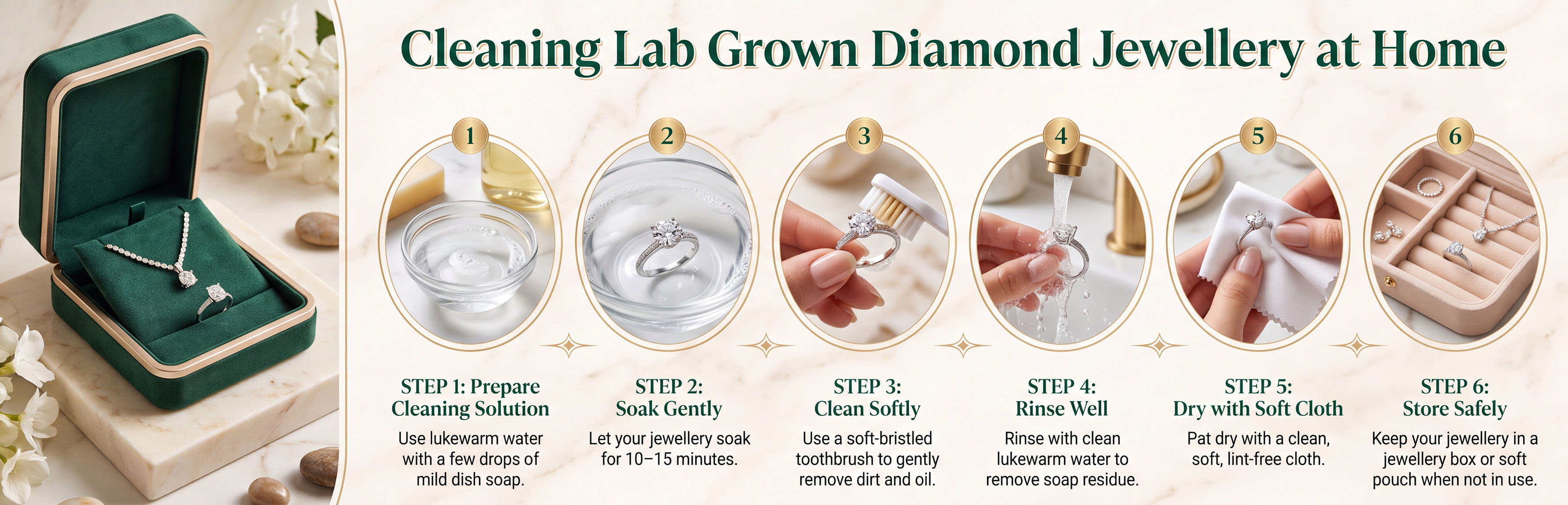
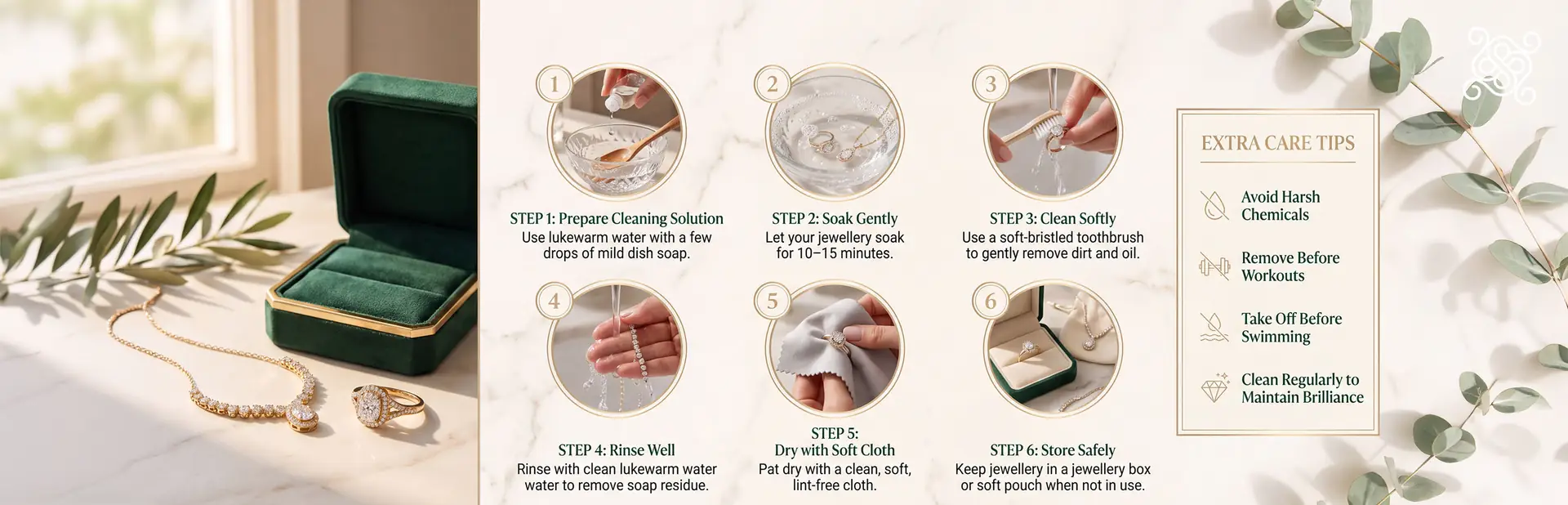
If you cannot get a professional cleaning and have an event coming up soon, you can clean your lab grown diamond jewellery at home. You can follow this step-by-step guide to ensure clean jewellery without damaging any pieces:
Step 1: Prepare a Mild Dishwashing Liquid and Lukewarm Water Solution
If you're cleaning your diamond jewellery at home, you won't need special chemicals.
You can use mild dishwashing liquid and mix a few drops in a bowl of warm water, then mix it with your hand to create lather.
Step 2: Separate Jewellery Pieces and Soak
Before adding your jewellery to the dishwashing liquid mixture, untangle it and place pieces together only if they won't scratch each other. Once you've placed the jewellery in the bowl, leave it to soak, as this helps loosen hardened dirt.
Step 3: Scrub the Jewellery with a Soft-Bristled Tool
After soaking the jewellery long enough, you can remove the loosened dirt and oil buildup with a soft-bristled toothbrush. Using a soft toothbrush, you can remove stubborn dirt by scrubbing gently in circular motions where dirt accumulates.
Step 4: Rinse Off Dishwashing Liquid & Dirt Well
Once you're satisfied that all the dirt has been removed, rinse off the mild dishwashing solution and dirt well. Rinse the jewellery a couple of times, as the dishwashing liquid's lather can create a white film on the diamond surface, dulling its sparkle.
Step 5: Pat Dry with Lint-Free Cloth
Remove the jewellery and pat it dry with a lint-free cloth that will not leave any small fibres on the pieces. Before storing the jewellery away, ensure that it is fully dry, as moisture can affect the jewellery and alter its appearance in the long term.
Step 6: Store Well in Appropriate Container
Store diamond jewellery in a container with suitable fabric and padding to prevent scratches. Store them individually or in separate compartments to prevent tangling, so that you can put them on quicker.
How Jewellery Type and Setting Affect Jewellery Care
1. Diamond Rings
Rings are most susceptible to encountering lotions, soap, and other cosmetics, meaning they can accumulate buildup quite quickly. Settings used in diamond rings also affect the amount of cleaning and care a design requires:
Rings with prong settings: oil and dirt can accumulate under the diamond or near the prongs, and clothing fibres can get caught in the ring.
Rings with bezel settings: the diamond is protected better, but dirt accumulates along the bezel rim.
Remember to remove rings when applying creams or doing household chores like washing dishes to help with jewellery maintenance.
2. Diamond Earrings
Diamond earrings also pick up dirt and buildup and require maintenance.
Dirt can accumulate on the stone while dry skin and oils can build up on the earring's post or butterfly.
Fancy diamond drop earrings can tangle if stored incorrectly, so store them in individual slots.
3. Pendants & Necklaces
Necklaces with delicate chains can tangle easily if not stored properly, and clasps can wear away over time with constant use.
Store these items in either a hanging or flat position to prevent knots and tangles.
4. 9Kt Jewellery
If you wear 9KT gold jewellery daily, gently wipe it with a suitable soft cloth to remove surface dirt and oils.
Keep it away from bleach and chlorine, as these chemicals may affect the metal's appearance.
After exposure to moisture or sweat, gently clean and dry the jewellery as appropriate for its design. Avoid prolonged contact with harsh chemicals.
Final Thoughts
Regular cleaning, careful handling and proper storage can help maintain the appearance of diamond jewellery. Periodic professional inspections can also help identify loose stones or damaged settings.
Cleaning lab grown diamond jewellery with household items like warm, soapy water, a soft toothbrush, and a lint-free cloth helps. In addition to at-home cleaning, professional cleaning removes stubborn dirt and helps in identifying structural issues that only a professional can catch in time.
FAQs
Can lab grown diamond jewellery be cleaned at home?
You can clean lab grown diamond jewellery at home, but check for structural issues, loose stones, delicate settings, and the metal type before washing to see if it's suitable. For suitable pieces, use mild dishwashing liquid, warm water, a soft scrubbing tool, and a lint-free cloth for drying.
Can I clean lab grown diamond jewellery the same way as mined diamond jewellery?
Yes, you can use the same lab grown diamond jewellery care practices for mined diamonds, but you should consider the metal used in the jewellery.
Why shouldn't I use hard brushes on my diamond jewellery?
Hard brushes can scratch metal and even damage the setting, even though the hard diamond remains unaffected.
How often should I clean my diamond jewellery?
There isn't a fixed schedule for cleaning diamond jewellery. For some delicate 9kt jewellery, a wipe after wearing may be sufficient. If your jewellery looks dull and its setting is secure, you may use a gentle soap-and-brush cleaning method, provided the materials and design are suitable.
Can I use toothpaste for cleaning my diamond jewellery?
Avoid toothpaste, as its abrasive particles can scratch metal and dull its appearance.