

If you’ve tried to buy jewellery recently, you’ve noticed distinct categories based on pricing, metal types, and craftsmanship. Understanding the composition, metal purity, and comparisons helps you choose what meets your needs.
This blog helps you draw a line between fine jewellery and other types of jewellery by learning about its properties and comparing it to other categories.
What’s Fine Jewellery?
It’s jewellery made primarily from precious metals and genuine gemstones, classified largely by the materials and construction used.
Gold, platinum and sterling silver are common raw materials used in this jewellery category, while diamonds and coloured gemstones such as rubies, sapphires and emeralds are occasionally used.
These pieces differ from short-lived, poor-quality costume jewellery, which is bought for a specific event or to wear once or twice.
This jewellery can make for worthwhile accessories, as its materials provide an opportunity for it to last long and even serve as a family heirloom.
How Does Fine Jewellery Differ from Other Jewellery?
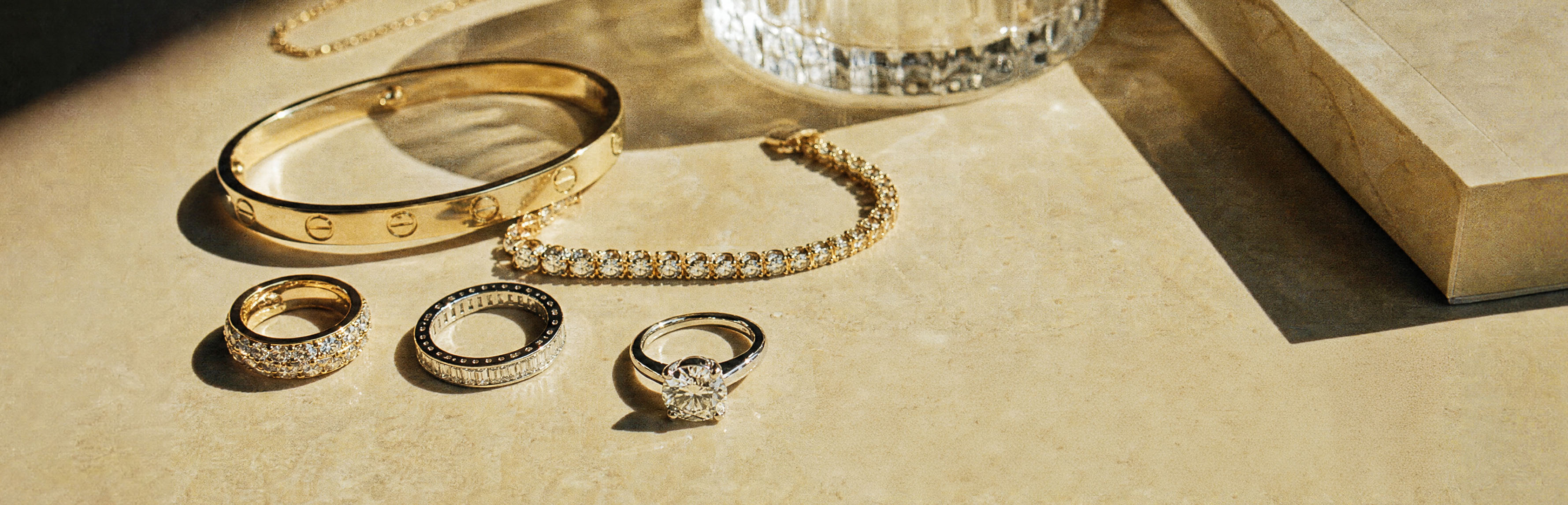
This jewellery sits in a category of its own because of various properties and qualities other jewellery types don’t have due to their pure and solid composition.
Improved Craftsmanship & Materials
The materials used in making fine jewellery are more expensive and valuable because they are long-lasting. This makes these jewellery items capable of withstanding the wear and tear of daily use and exposure to the elements.
Long Lasting
While other fashion jewellery may scratch easily, become tarnished, or lose its outer coating, this improved jewellery isn’t prone to these issues, at least not easily or quickly.
Durability
Fine jewellery can offer long-term durability, but longevity and resistance to tarnish and scratches are influenced by metal, finish, gemstones, construction, wearing and maintenance efforts.
Price Point
Although fine jewellery is priced higher than other categories of jewellery, the price is justified by the durability and value imparted by the metals used to make them.
It’s best to think of these items as lasting jewellery whose cost will be spread over the amount of time these items last. They are essentially a one-time cost since they last for much longer than low-cost jewellery items.
What Materials are Used to Make Fine Jewellery?
This type of jewellery is identifiable by its core materials; they are made of Gold, Sterling Silver, and Platinum. They aren’t coated, gold vermeil, or made from low-quality metal alloys, and here’s a closer look at the materials used in fine jewellery items.
1. Gold
Perhaps the most sought-after jewellery metal, gold is a staple in every Indian household.
Gold earrings, rings, and necklaces made from gold make for valuable and versatile jewellery that can be worn for various events.
Jewellery made from gold can appear in a variety of purities, including the following:
9Kt or 37.5% gold, denoted by “375”.
14Kt or 58.5% gold, denoted by “585”.
18Kt or 75% gold, denoted by “750”.
22Kt or 91.6% gold, denoted by “916”.
2. Silver
Silver jewellery has long been a popular alternative to gold jewellery, providing an affordable solution for most jewellery buyers. However, it does require more maintenance than gold as oxidisation can cause it to blacken.
Silver fine jewellery can have a purity of:
925 or 92.5% silver (the remaining 7.5% is made of other metals).
3. Platinum
Platinum is a precious metal becoming more common in finer jewellery, particularly in luxury jewellery pieces where its naturally white appearance and high density are desirable. It is also valued for its durability and resistance to corrosion.
Platinum is hallmarked with a “PT950”, which indicates a 95% purity.
4. Diamonds
Diamonds, whether mined or lab grown, are also a precious material used in making modern fine jewellery.
Here, rubies, emeralds, or diamond jewellery make appealing pieces suited to special occasions.
Diamond quality is measured by the 4Cs: cut, clarity, colour, and carat weight.
Fine Jewellery vs Demi Fine Jewellery
This category of jewellery occupies the space between fine and fashion jewellery.
Feature | Fine Jewellery | Demi Fine Jewellery |
Definition | Jewellery made with precious materials and gemstones, wherever applicable. | Jewellery positioned between fine and fashion jewellery. Definition varies by brand or materials used. |
Materials | Commonly uses precious materials (Gold, Sterling Silver, Platinum), may feature diamonds. | Can use sterling silver, vermeil, or gold-filled materials. (varies by brand) |
Gold Concentration | Gold may be used as the primary material and purity differs based on the jewellery piece. | Gold may appear as a solid metal, plating, or filling material along with another material. |
Craftsmanship | Often involves detailed and intricate construction, designing that can facilitate long-term use. | Craftsmanship differs by brand and product; some designed for frequent use and others for styling. |
Gemstones | May contain diamonds or lab grown diamonds, or coloured gemstones always genuine stones used. | May or may not contain gemstones, real gemstones can occasionally be used. |
Durability | Better durability makes them it wearable for a long time, but durability is influenced by material, construction, setting, gemstones, individual pieces.
| Durability is based on materials, plating, craftsmanship, and care provided to each piece. |
Maintenance | Maintenance requirements vary based on materials, settings, and wear frequency. | Materials and finish influence the maintenance requirements of this jewellery. |
Price | Higher price when the pieces contain more precious metal portions or valuable gemstones. | Priced lower than fine jewellery jewellery but price varies between brands, materials, and designs. |
Typical Use Cases | Weddings, Milestones, Anniversaries, long-tern ownership | Daily jewellery styling, gifting, fashion-centric jewellery purchasing |
Value Consideration | Material value can add resale value, but value retention is linked to metals, gemstones, brand, market conditions. | Resale and material value depends on metal composition, gemstones, construction, brand, and can be lower than fine jewellery. |
Fine Jewellery vs Plated Jewellery
Feature | Fine Jewellery | Plated Jewellery |
Definition | Jewellery primarily containing precious metals, and occasionally genuine gemstones. | Jewellery wherein the base metal and covering (plated) layer are different. |
Core Metal | Gold, Sterling Silver, or Platinum, may have Diamonds. | Either Brass, Copper, Stainless Steel, or another metal. |
Gold Content | Gold is the core metal for gold fine jewellery. | Gold forms the surface layer on top of another metal. |
Plating | The jewellery and its value aren’t influenced by plating. | Plating material is a core characteristic of the jewellery. |
Gemstones | If gemstones are used, they are always genuine. | Mostly use synthetic or imitation stones. |
Durability | Ideal for long-term ownership and use. | Plating can wear, scratch, and change over time. |
Maintenance | Requires care based on metal and gemstones. | Requires more care to preserve plating. |
Price | Higher pricing due to precious metal content. | Lower pricing because of lower quality of underlying metals. |
Typical Use Cases | Special Occasions, Anniversaries, Heirloom jewellery | Trend-led styling, occasional wearing, affordable accessorising |
Value Consideration | Precious metals, higher metal value. | Value proven by design rather than precious-metal content. |
Fine Jewellery vs Fashion Jewellery
This jewellery category is usually called fast-fashion jewellery and consists of short-lived jewellery that loses its appeal quicker than other jewellery forms.
Feature | Fine Jewellery | Fashion Jewellery |
Definition | Precious metals and genuine, high-quality diamonds when applicable. | Designed around latest fashion trends rather than precious metals. |
Primary Metals | Gold, Platinum, Sterling Silver, and genuine gemstones. | Based around metal alloys, imitation stones, decorative materials. |
Metal Construction | Precious metal is a substantial element in this jewellery. | Constructed from non-precious metals. |
Gemstones | Feature diamonds, rubies, emeralds, and other genuine gemstones. | Uses imitation or decorative stones. |
Durability | Designed for long-term ownership and use. | Usually bought for short-term use, susceptible to wear. |
Maintenance | Requires appropriate care. | Maintenance requirements vary but are more than other jewellery. |
Price | Higher costs due to precious metals and genuine gemstones. | More affordable than most other jewellery types. |
Typical Use Cases | Premium Gifting, Weddings, Milestones. | Fashion styling, seasonal trending jewellery, occasional wearing. |
Value Consideration | Have material value due to precious metal and real gemstones. | Limited precious material value and primarily bought for design. |
Is Fine Jewellery Worth Buying?
If you’re looking to own jewellery that lasts a long time, it’s worth buying fine jewellery.
This jewellery serves as a potential heirloom that can be passed on to future generations because it has the potential to last that long. Due to this, you won’t have to constantly worry about jewellery repair and replacement costs.
If longevity and lasting appeal are some qualities you want your jewellery to have, select fine jewellery.
If you want trending jewellery that will stay relevant for the moment or a specific occasion, pick costume or fashion jewellery.
If you want jewellery that lasts longer than fashion jewellery but isn’t as costly as fine jewellery, select demi fine jewellery.
Final Thoughts
If you’re thinking about buying new jewellery, understanding your requirements, preferences, and budget is necessary for making the best purchase.
By knowing the qualities of fine jewellery, the purities of the metals used, and how it compares to other jewellery types, you can make an informed decision that supports your jewellery requirements.
FAQs
What makes fine jewellery different from fashion jewellery?
Fine jewellery uses precious metals and high-quality diamonds and features better craftsmanship.
Is White Gold Jewellery considered fine jewellery?
Yes, white gold jewellery is considered in this jewellery category because it contains gold. It gets its ‘white glow’ from a shiny rhodium plating.
Why is white gold diamond jewellery so popular for engagement rings?
White gold and diamond jewellery increases diamond sparkle due to its bright white finish. It has a modern, graceful appearance with the quality and value of fine jewellery.
Does fine jewellery hold long-term value?
Yes, these items are made from valuable precious metals. However, you need to maintain them to retain their value.
Is fine and demi fine jewellery the same thing?
No, they are not the same thing, as demi fine jewellery is a jewellery category that sits between fine and fashion-centric jewellery.