

Rings aren’t just fashion accessories; some have sentimental value and mark achievement or a commitment. Sudden ring loosening or changes to finger size can cause your ring to lose its ideal fit.
Knowing what to do if your ring is too big can help reduce the risk of losing or damaging it while allowing you to continue wearing it comfortably.
This blog provides effective temporary and permanent solutions for rings that feel loose.
Why Ring Fit Matters So Much
A well-fitting ring should easily slide onto your finger but resist slipping off unintentionally. The fit should be secure but not tight enough to cause discomfort.
Fitting issues can be experienced in plain ring bands and in diamond rings as well, but the reasons for their fit issues can differ.
Ring fit can be influenced by ring size, band width and profile, overall ring construction, and changes in finger size. In some designs, the setting and weight distribution can also affect how the ring sits or rotates on the finger
You’ll know your ring is too big if it can:
Slip off during activities without you noticing.
Rotate and cause inconvenience.
Become more vulnerable to accidental damage.
A good fit is crucial for comfort and to enhance the ring’s wearability.
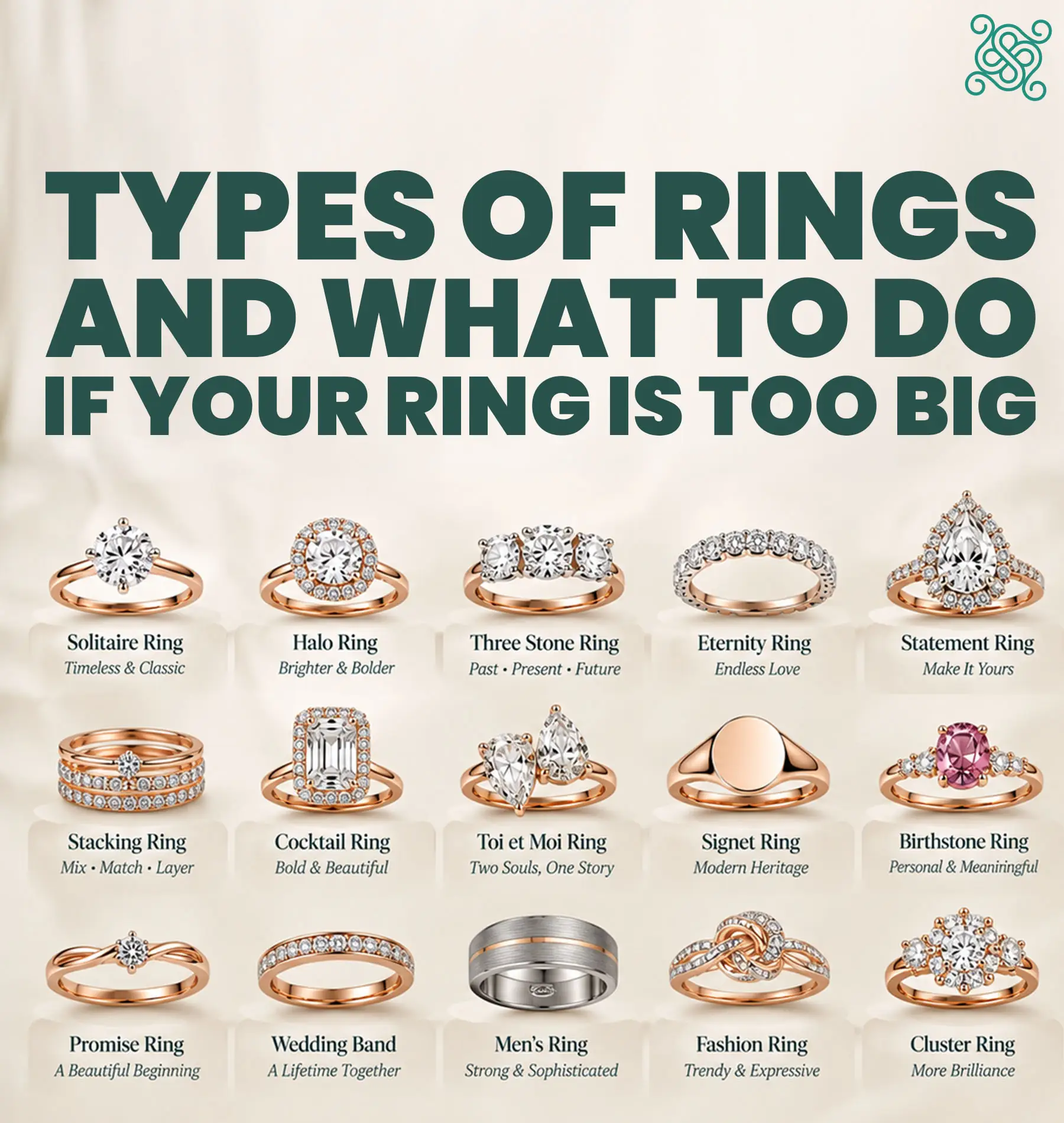
Common Types of Rings
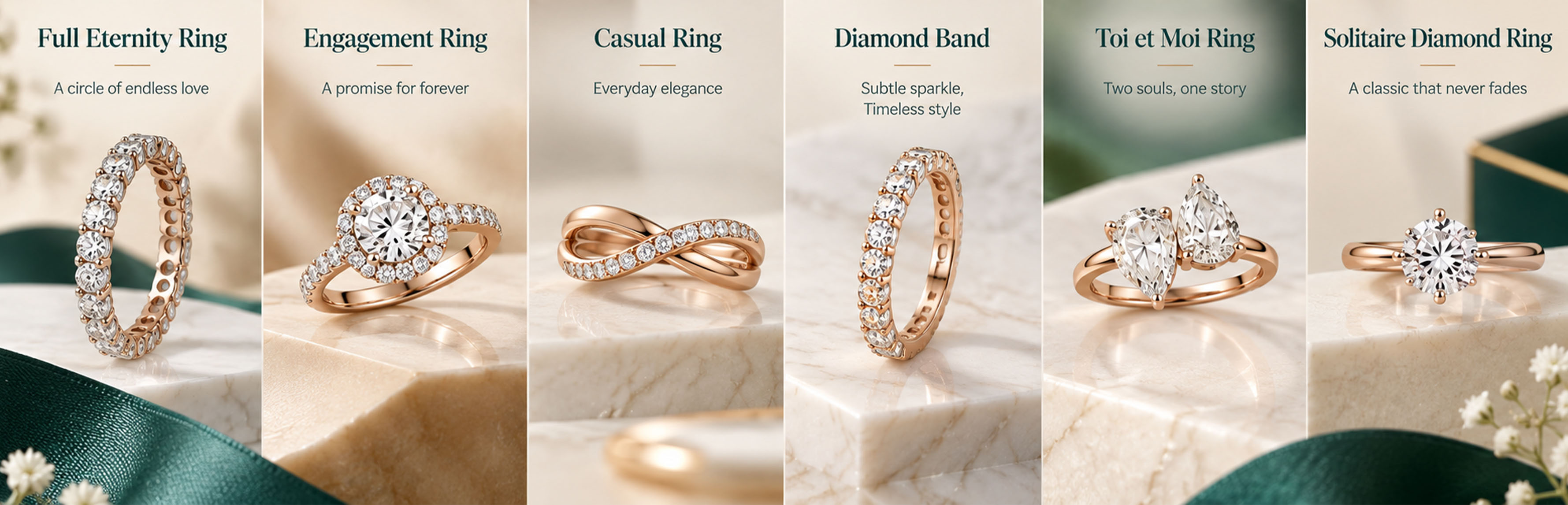
Knowing your options can help you make a better decision when buying a new diamond ring, so here’s a look at some popular types.
1. Eternity Rings
These are amongst the most decorated diamond rings, made with embedded diamonds right around the outer circumference. These could use fancy-shaped diamonds, such as Baguette, Emerald, Oval, or Pear shapes. Their endless sparkle profile makes them a diamond ring design to consider reserving for auspicious celebrations.
2. Engagement Rings
Commonly known as a symbol of love, engagement ring designs vary from having a single, large, unaccompanied solitaire diamond to having a halo or pavé design surrounding the statement stone, the ring band, or both.
3. Casual Rings
These rings are designed to be wearable daily, and they range from simple rings featuring a few diamonds to highly detailed ones with 40+ diamonds, making the design more suitable for events that require statement-making diamond jewellery.
4. Diamond Bands
These rings feature diamonds embedded across a certain portion of the ring band and not throughout like eternity rings. These rings merge the concept of plain ring bands with the sparkle of lab grown diamonds.
5. Toi et Moi
These timeless rings for women have a two-principal-stone design, and both stone shapes are usually different, allowing them to complement each other. The classic look created makes the Toi et Moi ring an evergreen jewellery option for women with minimalist jewellery preferences.
6. Solitaire Diamond Rings
These rings may contain one or more diamonds but guarantee at least one diamond whose carat weight exceeds 0.20ct. These rings can be worn as daily wear rings for women looking to add sparkle to everyday looks.
Why Do Rings Become Loose Over Time?
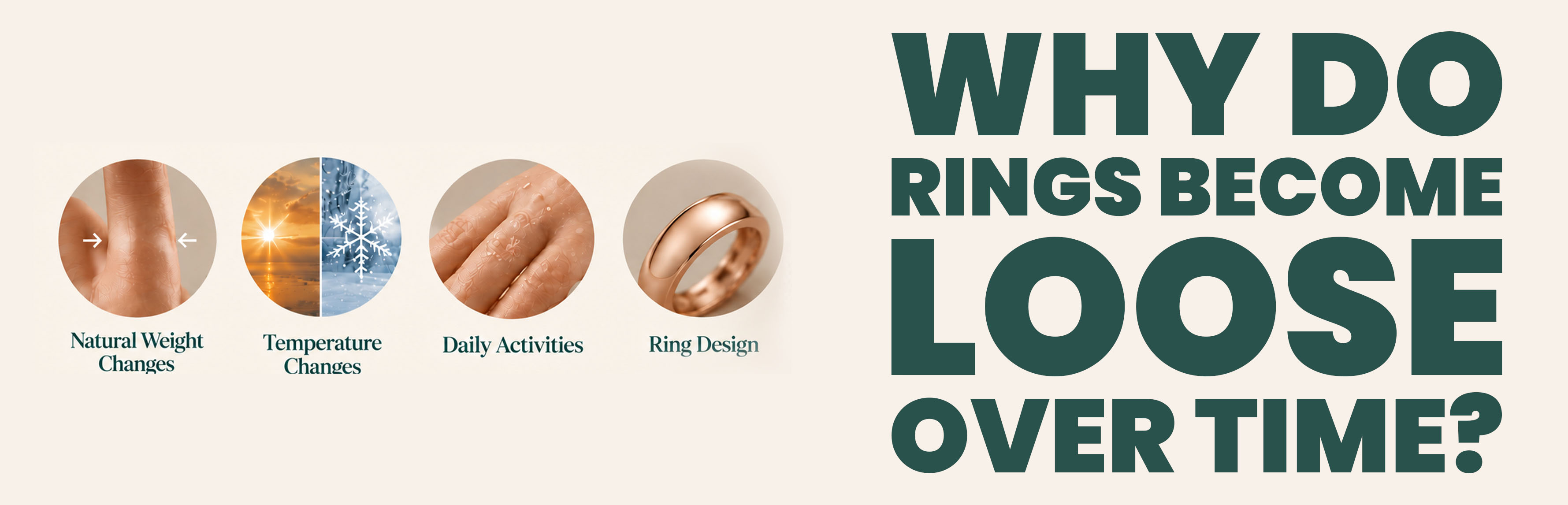
A ring may begin to feel loose even if it originally fitted correctly. This doesn't always mean the ring itself has changed size.
Changes in finger size or body weight can affect ring fit.
Cold weather can temporarily make fingers feel smaller.
Normal fluctuations in finger size can make a ring feel tighter or looser at different times.
Wear or changes to the ring's structure may also affect its fit over a long period.
Because some changes in fit can be temporary, consider whether the ring remains consistently loose before deciding on permanent resizing.
How to Tell if Your Ring is Too Big
If your ring is starting to get too loose to wear, these warning signs usually show that it’s time to take a serious look at it and consider make-shift solutions or professional resizing.
Constantly needing to readjust or reposition your ring.
Frequent slipping down or completely falling off.
Rotating causes your ring to face the wrong direction.
Your ring fits differently than it used to when purchased.
These red flags show that something has changed but shouldn’t be confused with the short-term ring size changes that usually resolve after your health improves or the weather changes.
Risks of Wearing a Loose Ring
Continuing to wear a loose ring can have negative effects, most notably the risk of losing the ring entirely! Look at the other risks associated with wearing a loose ring.
Constant Slipping Off & Ring Loss
As rings wear with daily use, their inner bands will slowly smooth and thin, creating a different size and a looser fit. Wearing rings that are worn out and loose will eventually lead to constant slipping down, or you could eventually lose the whole ring!
Inability to Work Properly
A ring that keeps slipping or rotating around your finger can disrupt your daily work.
Greater Risk of Ring Damage
A loose ring can shift easily, making it more susceptible to damage, including scratches or loosened gemstones.
Temporary Solutions for a Ring That's Too Big
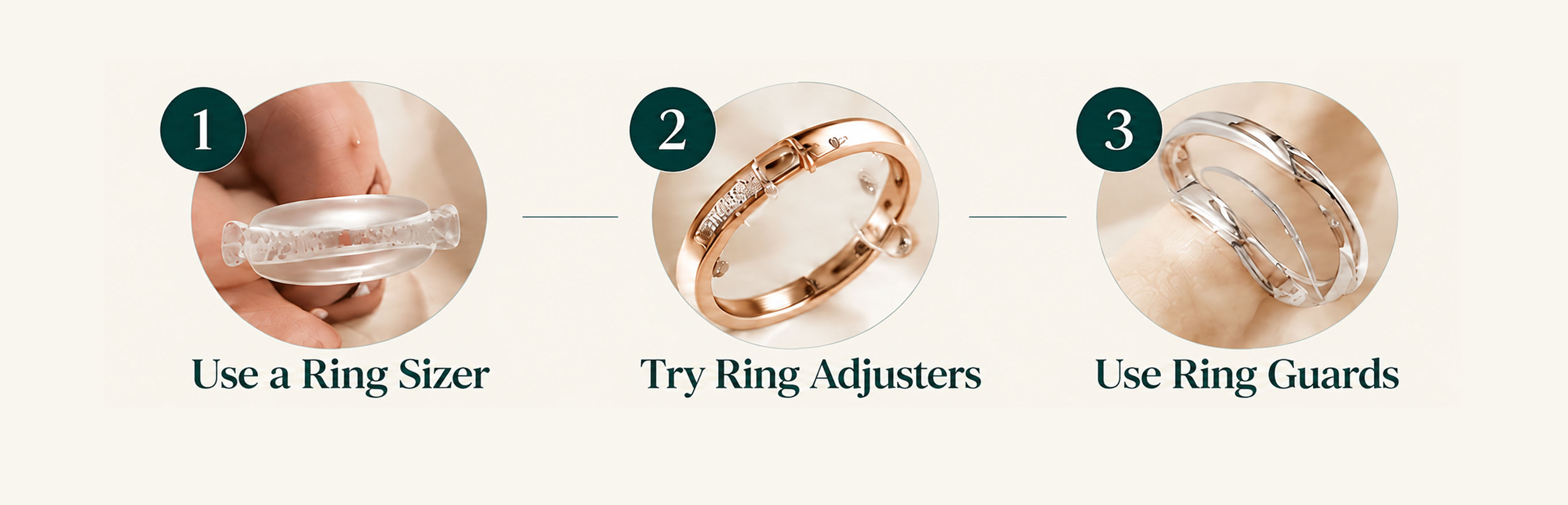
When temporary changes in finger size cause your ring to feel loose, a purpose-made ring adjuster may help improve the fit until you decide whether a professional solution is needed.
Ring Guards
These objects are usually made from metal and are flexible, allowing you to clip them onto the ring band to reduce the diameter. This option doesn’t require any tools or physical transformation and is one to consider for metals that are hard to resize.
Silicone Ring Size Adjusters
These soft silicone inserts fit into the ring band and reduce the space inside, allowing the ring to fit better. People love this option as it’s a relatively low-cost and comfortable way to help with seasonal ring loosening.
Professional Solutions for a Loose Ring
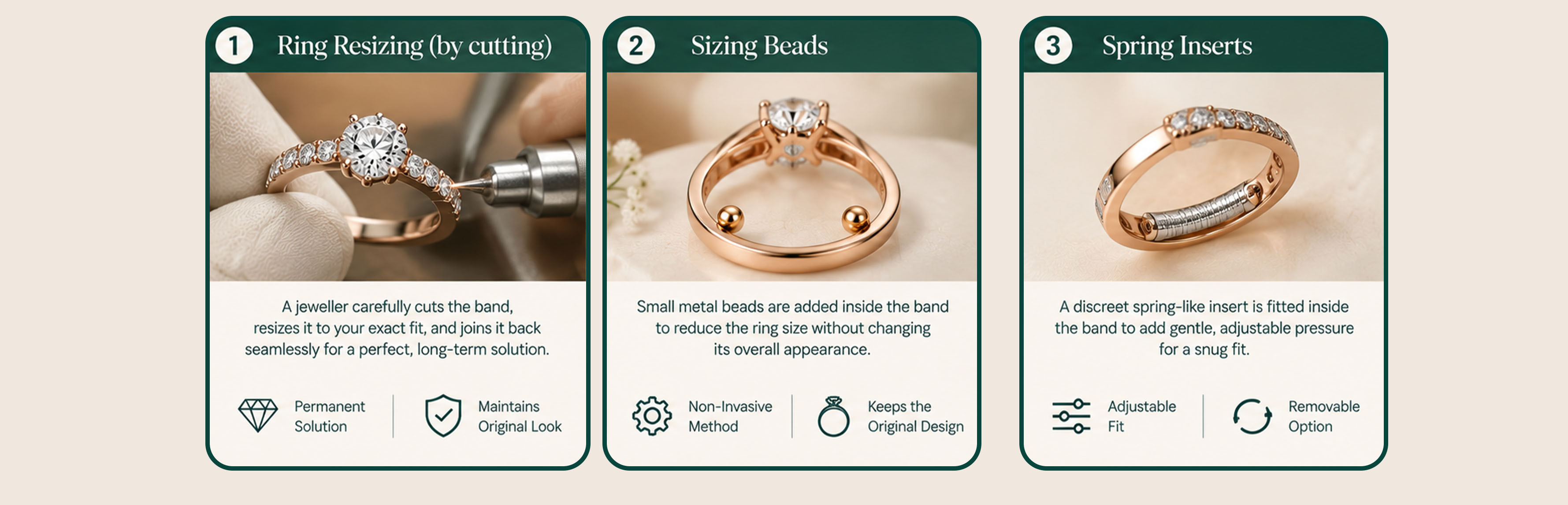
The solutions are permanent and usually require specialised tools and professionals to resize the ring.
1. Ring Resizing
A professional jeweller may resize a ring by carefully altering its band. The method depends on the ring's metal, construction, setting and the amount of adjustment required. Some methods involve removing a small section of the band before reshaping, joining and refinishing it. A jeweller should first assess whether the ring can be safely resized.
2. Sizing Beads
In this resizing method, small metal spheres are soldered onto the inner bottom of the ring band. These sizing beads help reduce ring size by taking up some space at the band’s inner base. This is a permanent solution and is an option worth considering for people who have larger knuckles but slimmer fingers.
3. Spring Inserts
Here, a horseshoe-shaped metal insert is placed inside the band, or at the base. The thin flat strip insert also contains a spring that contracts when pressure is applied and then expands when the pressure is released. This makes it an option for people with knuckles wider than the base of their finger.
Which Rings Can Be Difficult to Resize?
Not every ring can be easily permanently resized due to the diamond setting, design, and construction. This makes it difficult to perform resizing as easily as other ring types, and the ring should be assessed by a professional jeweller.
1. Full Eternity Rings
Full eternity rings feature diamonds or gemstones around the entire circumference of the band. Because stones and settings extend around the band, resizing can be difficult and may affect the spacing, setting or overall design. A jeweller should assess whether resizing is possible for the specific ring.
2. Intricate Diamond Rings
Diamond rings made with specific techniques or intricate detailing may not be suitable for resizing, which can spoil the ring’s appearance. Intricate rings may have engraving, and resizing can remove the piece's sentimental value.
3. Antique/Vintage Rings
Antique and vintage rings may require additional care when resizing because their condition, construction, settings and design details can vary. Resizing may also affect original detailing or engraving, so the ring should be assessed by a jeweller experienced with older jewellery.
Final Thoughts
Different ring designs come with different fittings, and it's crucial to know what to do if your ring suddenly becomes loose. Several factors can make a ring too loose and cause fit issues.
This blog lists temporary and permanent solutions to consider when your ring is too big.
When buying a lab grown diamond ring from Svaraa, use our Ring Size Guide to ensure you get the right size, and use the 15-day exchange if you’re not satisfied with the fit.
FAQs
What can I do if my ring is too big?
You have several temporary and permanent options for a ring that’s too big. Temporary options include inserts or ring guards, while permanent solutions include resizing and adding sizing beads.
Can all diamond rings be resized?
Not every diamond ring can be easily resized. Full eternity rings, intricate designs and some antique or vintage rings can be more difficult to alter because resizing may affect their settings, structure or design. A professional jeweller should assess the individual ring.
Do I have to cut or melt my ring to resize it?
Not necessarily. The resizing method depends on the ring's construction, metal and the amount of adjustment required. Some professional resizing methods involve altering the band, while sizing beads or other solutions may be suitable in certain cases. Ask a jeweller to recommend the appropriate method for your ring.
Are at-home solutions for loose rings effective?
Purpose-made ring guards and silicone size adjusters can temporarily improve the fit of some loose rings. They are not a substitute for professional assessment when a ring remains consistently loose.
My ring is suddenly loose; should I resize it?
Not necessarily. Finger size can fluctuate temporarily, including due to temperature changes. If the ring remains consistently loose, consider having the fit assessed by a professional jeweller before making a permanent alteration.