

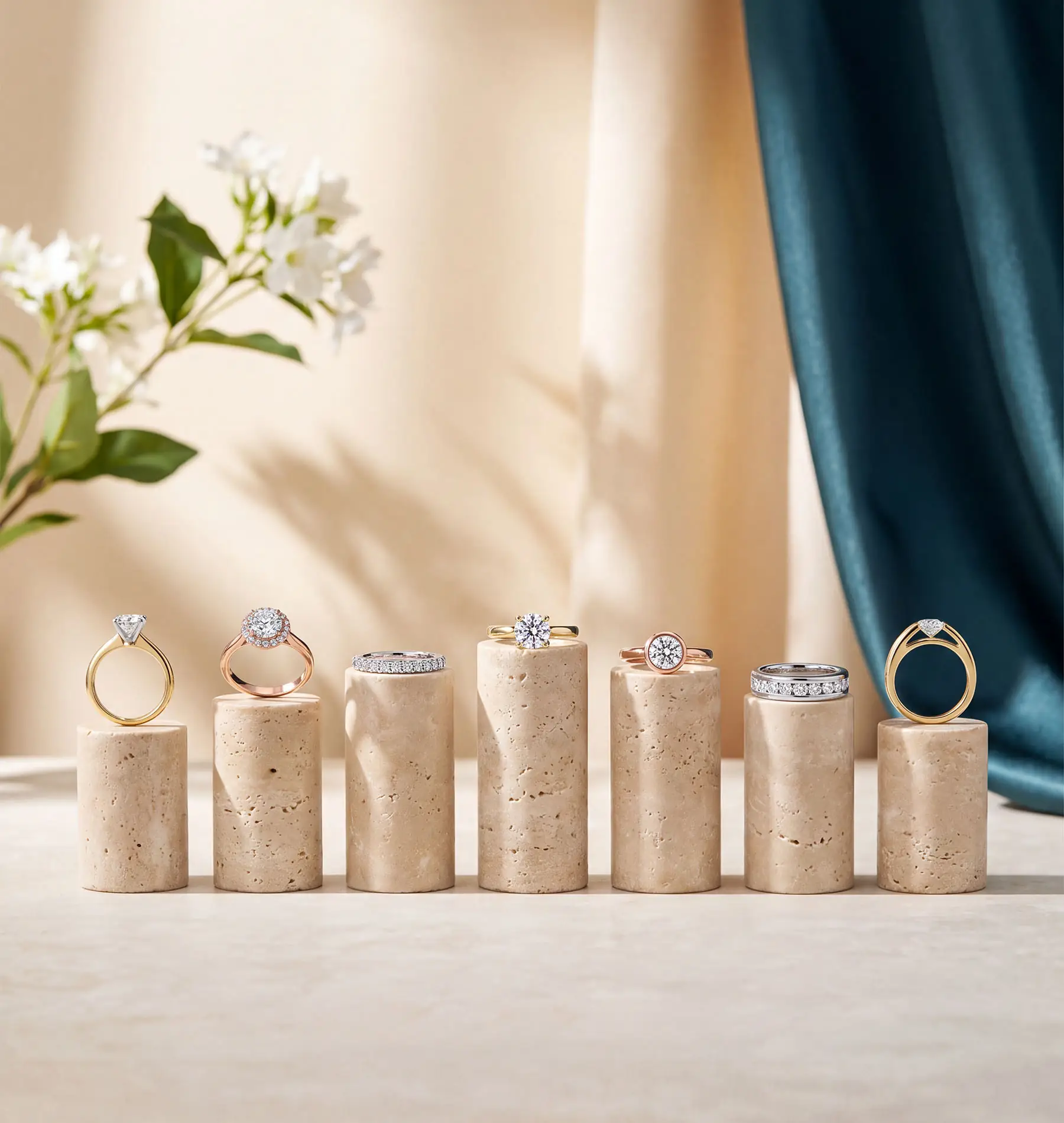
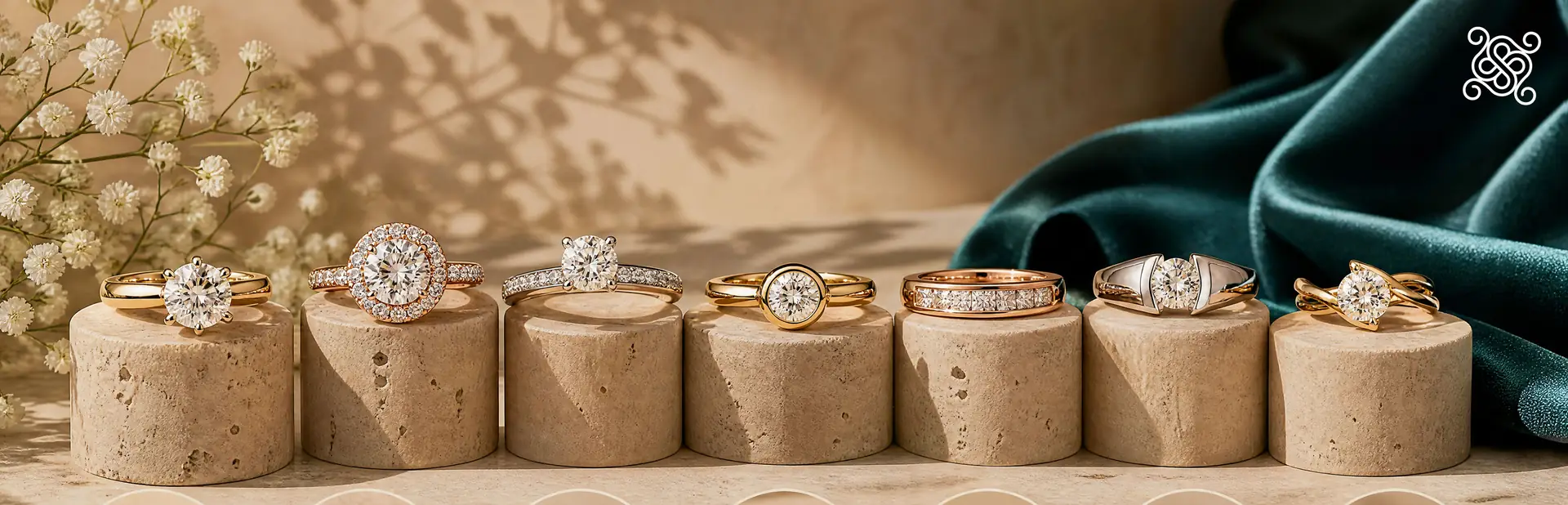
Diamond setting types describe how diamonds are secured within a jewellery design. Common settings include prong, bezel, pavé, channel, flush and tension settings, while halo and cathedral describe related design arrangements. Each option affects the jewellery's appearance, comfort, stone protection and maintenance needs. The right choice depends on the diamond's shape, the jewellery type and how often you plan to wear it.
This blog covers the different types of diamond settings used in jewellery, their pros and cons, and how to choose the right setting for you.
Quick Guide to Diamond Settings
Type of Setting | Holding Mechanism | General Appearance |
Prong | Single metal claw that grips the stone from various angles or corners | Raised look, most of the diamond is visible. |
Double Prong | Two metal claws gripping the stone from corners or various angles. | The diamond is raised with slightly more coverage than single prongs. |
Bezel | A metal rim surrounds all or part of the stone. | Low profile with a smooth appearance. |
Channel | Stones sit in a line with metal walls on either side. | A continuous row of diamonds. |
Halo | Accent diamonds held by shared prongs. | Small diamonds circling a large centre diamond. |
Pavé | Many small diamonds arranged together. | Many small diamonds arranged together. |
Bar | Vertical metal bars are used to hold each diamond. | Partially visible metal bars between stones. |
What Does Diamond Setting Mean?
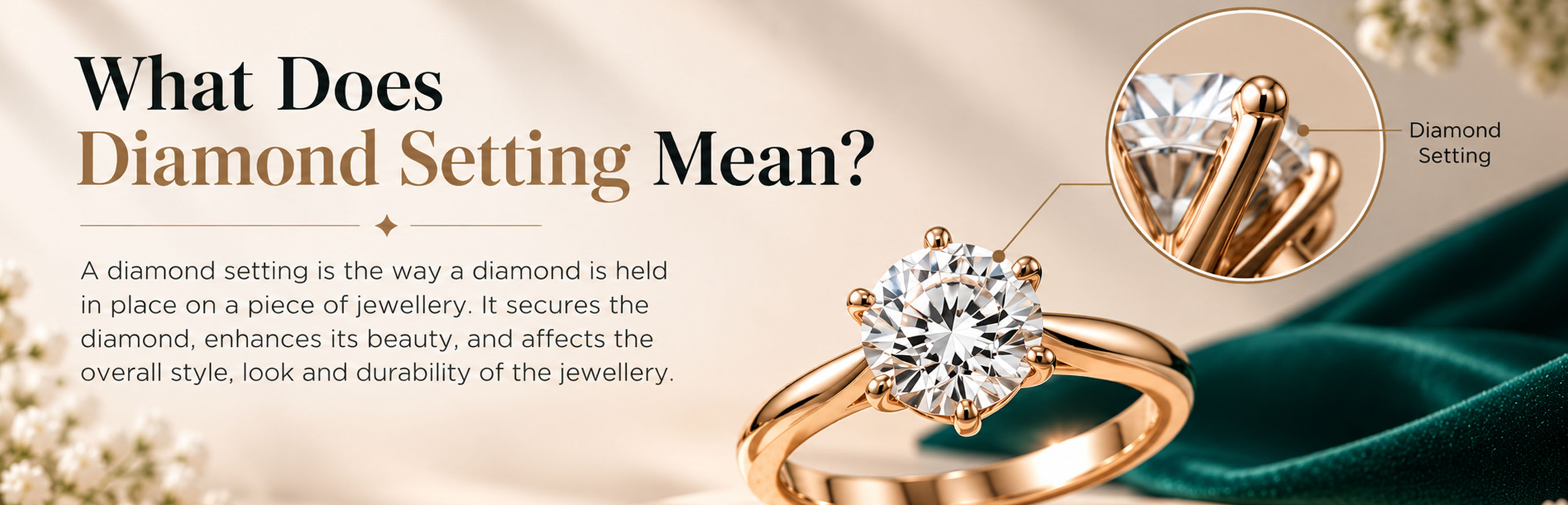
A diamond setting defines how a diamond is held. This can influence how a design looks, how much of the diamond is visible, the diamond’s brilliance, and how the piece will wear over time.
In jewellery, different diamond setting styles are based on the type of jewellery, its purpose, and design.
How Diamond Setting Type Affects Jewellery
A diamond’s setting can influence various properties surrounding a piece of jewellery.
Stone Security
Settings are crucial to stone security because they hold the diamond in place. Choosing the right diamond setting helps keep your diamond in place and prevents it from falling out or shifting from its original position.
What to consider: The most appealing diamond settings don’t always offer the best security. Consider a balance between coverage and diamond visibility to get a design that looks appealing but has a secured stone.
Brilliance and Fire
Certain jewellery settings influence how much metal covers the diamond. Coverage can affect how much light enters the diamond and the angles at which it is reflected. This can play a role in deciding the piece’s fire and brilliance.
What to consider: Prong, tension, and cathedral settings are popular because they cover the least surface area of the diamond, allowing light to enter from multiple angles and reflect.
Maintenance & Cleaning Requirements
The setting also affects your jewellery care habits, as it influences how dirt and oils build up around the bezels. It also affects how difficult the jewellery is to clean.
What to consider: More coverage and complexity in the setting means that dirt and oils may easily accumulate with frequent wearing.
Comfort
The setting can also affect the comfort of a diamond jewellery piece. This is especially important for jewellery worn for longer periods and in areas where comfort is crucial, like the hands and ears.
What to consider: Consider the construction and finish of a setting before buying jewellery, as it can play a role in comfort.
Types of Diamond Settings in Jewellery
In jewellery items such as diamond rings and earrings, diamond settings play a role in appearance.
Prong (or Claw) Setting
This setting uses multiple prongs to hold the stone through metal claw-like structures that are fixed to the underside of the design. The number of prongs in a design varies based on the design and characteristics of the diamonds.
Double Prong Setting
In this subtype of the prong setting, two prongs sit at each corner of the stone. Though two prongs are placed at each side, protection and overall appearance depend on the workmanship and design of the piece.
Cathedral Setting
This setting design, usually seen in rings, features several arches rising from the band, and it provides the stone with prominence through a raised structure.
Bezel Setting
In this setting, a metal rim surrounds the sides of the diamond, holding it in place. A full bezel is a continuous case of metal surrounding the diamond, while a partial bezel only surrounds certain areas of the diamond, such as opposite ends.
Pavé Setting
A pavé setting uses small metal beads or prongs to set small accent diamonds in a close arrangement. This setting is usually used to decorate the ring band, or other metal structures close to the main stone.
Channel Setting
Diamonds in a channel setting are lined up in a continuous line and held by a continuous metal strip on either side. This option creates a clean, sophisticated look because the metal setting doesn’t interfere with the design.
Tension Setting
This setting takes a different approach. The diamond is wedged between two metal ends, which hold it in place through force. This creates an appealing illusion as if the diamond is suspended in air.
Flush Setting
In this setting, the diamond is laid flush into the metal. This ensures that it doesn’t protrude from the piece of jewellery. This can greatly reduce accidental damage to the diamond while still ensuring an appealing jewellery piece.
Bar Setting
This setting is like the channel setting except that instead of horizontal metal guards to hold the diamond, vertical metal lines are used to hold each diamond.
Halo Setting
This decorative arrangement places a circle of small accent diamonds around the main stone to create an outline of smaller diamonds.
Pros & Cons of Popular Diamond Setting Styles
Diamond Setting | Stone Protection | Everyday Comfort & Snagging | Maintenance | Resizing & Repair | Ideal For |
Prong | Only cover certain parts of the stone based on the number of prongs. | Raised prongs can catch on fabric or hair. | General dirt accumulation, wear and tear, but can benefit from periodic checks. | Resizing remains unaffected, and prongs can be tightened and rebuilt. | Solitaire jewellery, pendants, stud earrings, or designs that focus on the stone. |
Double Prong | Each prong placement consists of two prongs. | Prongs can snag on clothing, even if small-sized. | More prongs to inspect for security and more to keep clean. | Repairing is possible but careful handling is necessary. | Jewellery that includes fancy diamond shapes and careful setting. |
Bezel | Rims cover the complete edge or parts of it. | The smooth rim can be more comfortable with no chances of snagging on clothing. | Dirt and oils can accumulate between the diamond and metal bezel. | Bezels can become scratched with regular wearing.
| Bracelets, bangles, rings. |
Channel | Two metal walls act as guardrails for diamonds. | Lower risk of snagging compared to other settings. | Occasional cleaning is necessary to clean the dirt that builds up in the channel. | Resizing may be limited based on design. | Diamond weddings bands, engagement ring bands |
Bar | Vertical bars hold the stones, but the sides may be exposed. | Fairly smooth metal structures. | The open sides can make maintenance easier. | Limited resizing, and repairing can be affected by number of stones in the design. | Eternity rings, bracelets with gaps between stones. |
Choosing a Jewellery Setting Based on Diamond Shape
Diamond Shape | Setting to Consider | Important Notes | Why It Works |
Round | Prong, double prong, halo, bezel | Round diamonds can work with multiple settings. | The symmetrical outline of round diamonds suits most settings. |
Oval | Prong, Halo, Bezel | The slightly elongated shape can work with many settings. | Prongs allow the stone's shape to be visible while bezel setting allows the metal follows the smooth curves. |
Cushion | Prong, Halo, Bezel | Rounded corners require protection. | Prongs placed at corners can guard the corners, a bezel covers them fully or partially, and a halo adds more diamonds to the design. |
Marquise | V-shaped bezel | The pointed ends may need extra protection. | V-shaped bezel settings cover both the points, which are the most delicate part of the stone. |
Princess | Prong, Bezel | Corners may be prone to chipping if right setting isn’t selected. | Prong and bezel settings can cover the sharp corners of the diamond. |
Pear | V-shaped bezel, Prong | The pointed end requires protection. | A V-shaped bezel setting secures the point while other settings such as prongs can be used for the rest of the stone. |
Heart | Prong, Halo | The point and cleft are two delicate areas to protect. | Requires careful prong setting selection due to cleft and point. |
Emerald | Prong, Halo | Straight corners still need protection. | Corner-based prongs hold the stone without hiding the architecture of the shape. |
How to Choose the Right Diamond Setting for You
Choosing a diamond setting that actually works for you requires you to consider the following factors:
1. Jewellery Type
Decide what type of jewellery you want: diamond earrings, a ring, a necklace, or something else. Choose the setting based on the piece; one setting isn’t ideal for every type of diamond jewellery.
2. Establish Your Budget
Having a clear idea about how much you want to spend can help you narrow down your options. Clarifying this early on will help you stay within your budget and start assessing designs that are within your range.
3. Consider Lifestyle & Daily Activities
Before settling on a setting, consider whether it will align with your daily activities and lifestyle and fulfil your requirements.
4. Factor in Security and Brilliance
Since the setting can affect the diamond’s security and appearance, decide which you want to prioritise, and whether you can prioritise both.
5. Think About Metal Purity, Style, and Finish
Metal purity options include 9Kt, 14Kt, and 18Kt, and you'll also need to choose a metal finish. You can choose from various band types, but consider your comfort needs before selecting one.
6. Assess the Ring as a Whole
Consider how the setting, diamond, and band you’ve chosen will come together. When looking for the right setting, ask questions about fit and feel, not just appearance.
Different Diamond Settings in Svaraa Jewellery
At Svaraa, a variety of different diamond settings are used in the jewellery. Here’s a look at the types of settings for diamond rings, earrings, pendants, necklaces, bracelets and bangles.
Rings
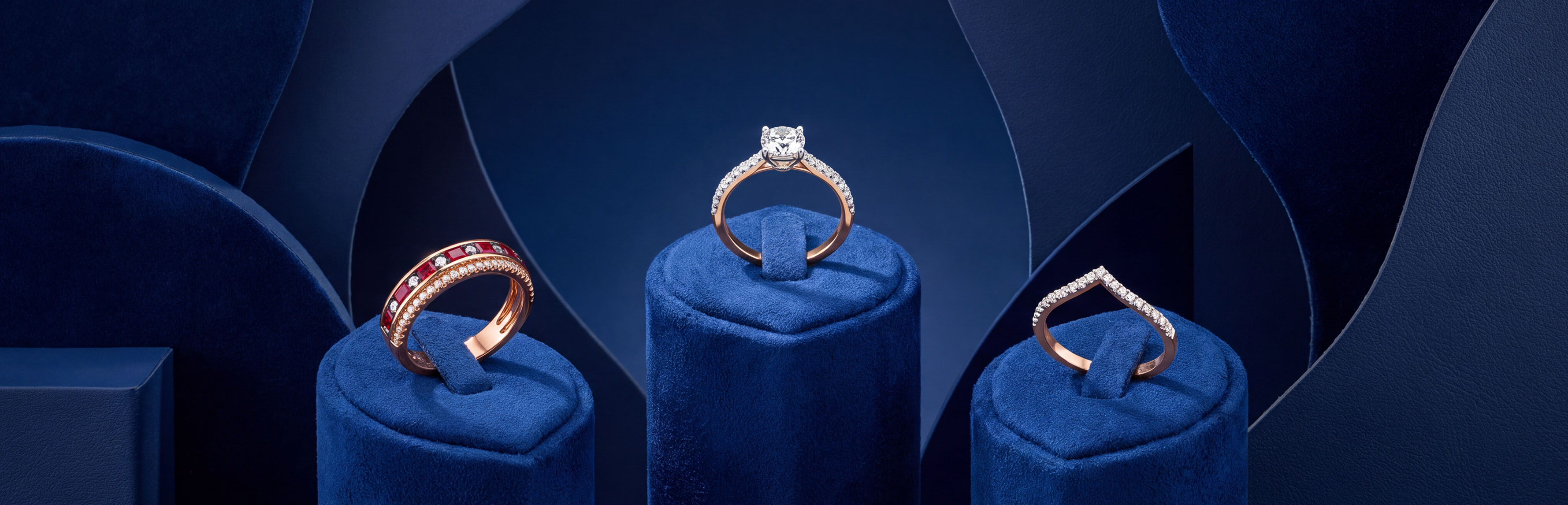
Sleek Horizon Lab Grown Diamond Casual Ring
This casual ring features a shared-prong setting, which can also be described as a shared claw setting.
Design Features to Note
The diamonds are arranged neatly, creating one row of stones.
The prongs are colour-matched in a white tone to align with the diamonds.
Arils Serenity Lab Grown Diamond Ring Band
The Arils ring band uses two types of diamond settings for its combination of gemstones and diamonds. A channel setting is used for the gemstones, while a prong setting is used for the diamonds.
Design Features to Note
The coloured gemstones form a repeating pattern with the round diamonds separating each gemstone.
The round stones are set using individually defined round prongs.
Vow Harmony Lab Grown Diamond Solitaire Engagement Ring
This Svaraa Solitaire ring features four prongs to hold the main diamond, which is accompanied by a pavé setting on the shoulders of the ring.
Design Features to Note
The cushion-shaped diamond is held by four prongs, located at each corner.
The diamond-set shoulders add more diamond detailing without competing with the centre stone for attention.
Earrings
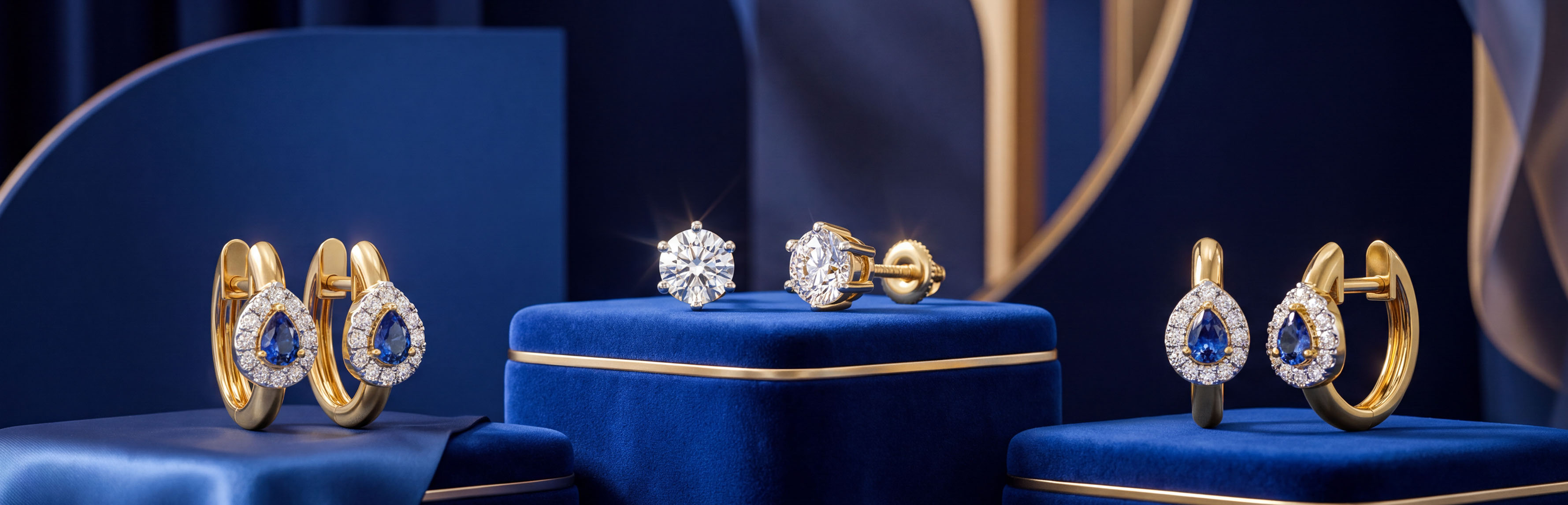
Orynth Wave Lab Grown Diamond Earring Hoops & Bali
These hoop earrings have a blue-coloured gemstone in the centre, fixed by three round prongs. It also features a halo design that sees small round diamonds create an outline around the main pear-shaped gemstone.
Design Features to Note
The colour contrast created between the blue and white stones creates a layered appearance.
The white prongs also create a layer of contrast against the yellow gold used to craft the rest of the jewellery piece.
Timeless Crest Lab Grown Diamond Classic Solitaire Earring
This stud earring is a Svaraa Solitaire design that features a round diamond fitted using a six-prong setting along with a basket-style gallery where a small 'basket' or wire frame cradles the diamond.
Design Features to Note
The six prongs are distributed around the diamond in a way that creates balance but also appears secure.
The raised basket doesn't cover or hide the diamond, ensuring it can be seen.
Pendants
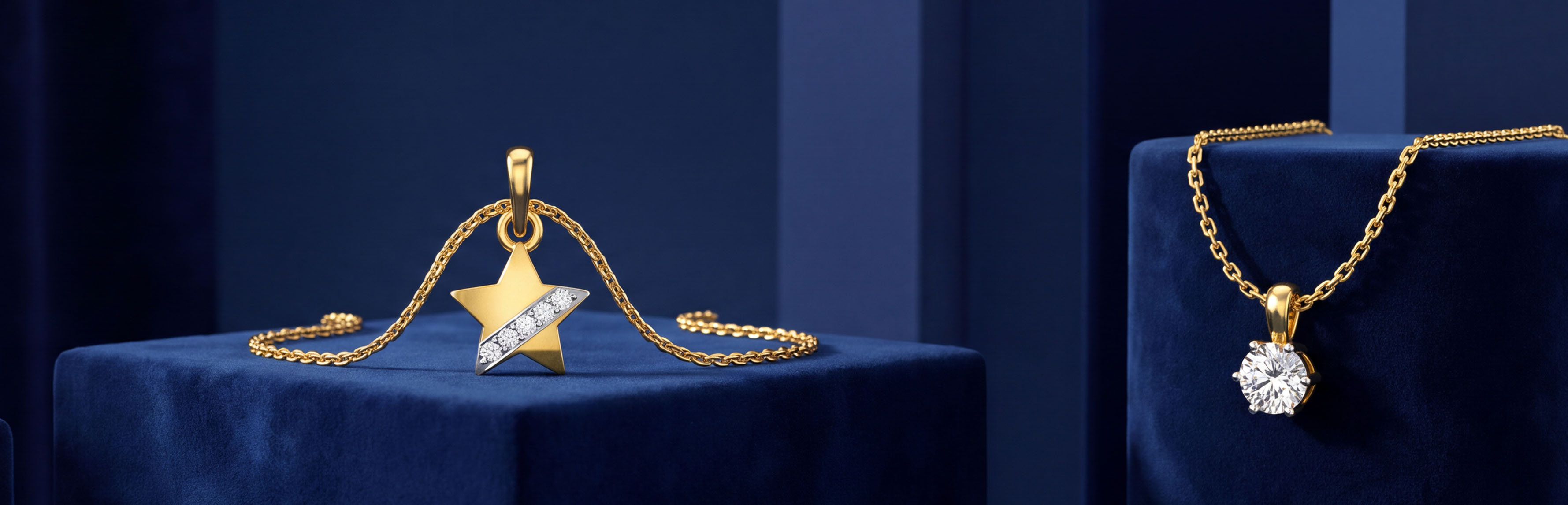
Prime Sphere Lab Grown Diamond Solitaire Pendant
The main stone in the Prime Sphere pendant is held in place using a prong setting and an open-style basket gallery that increases visibility.
Design Features to Note
There's a single diamond present in the design, and the gallery design ensures more of the diamond is visible.
Stellar Whisper Lab-Grown Diamond Pendant
This pendant features diamonds set using a bead prong setting and a design that places the diamonds flush with the metal dip.
Design Features to Note
The diagonal line of diamonds creates a sense of movement across the star motif.
The linear diamond design ensures that the whole pendant is decorated and doesn't appear to be bare in any area.
Necklaces
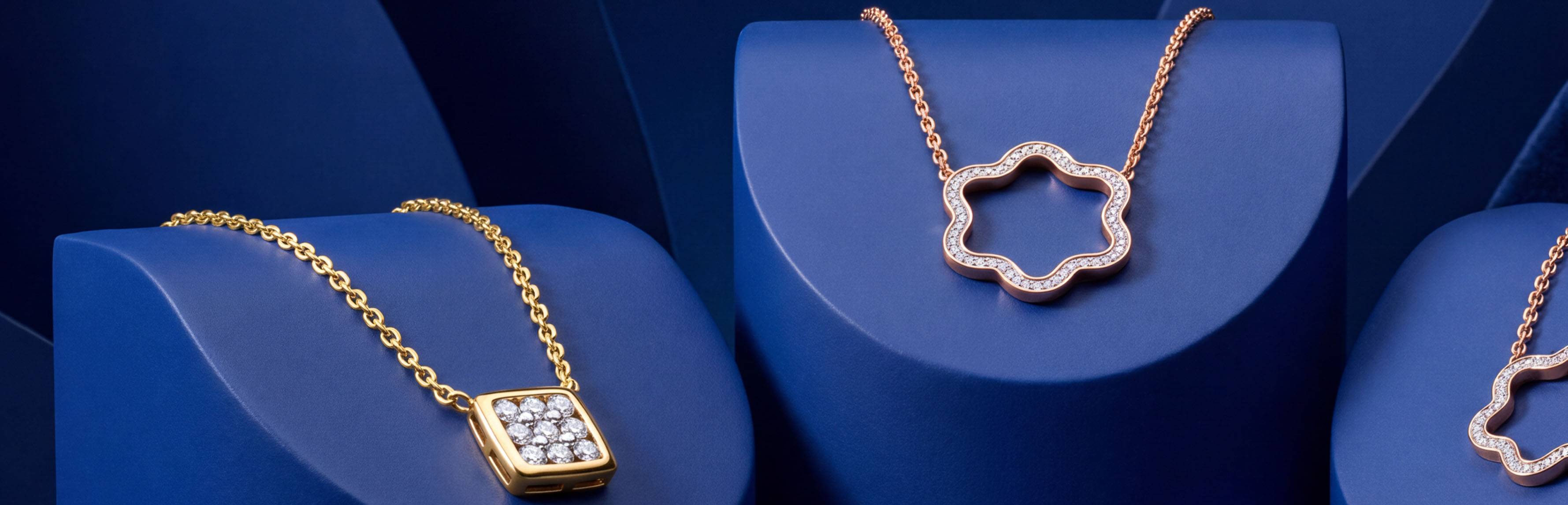
Contour Curves Lab-Grown Diamond Modern Necklace
This design uses a pavé setting accompanied by two prongs between diamonds. The diamonds sit between two curved walls to create a distinct floral outline that looks appealing for casual outings.
Design Features to Note
It features a closely set row of diamonds throughout the curved metal outline.
The rose gold frame creates contrast against the row of colourless diamonds.
Cubical Grid Lab-Grown Diamond Modern Necklace
This necklace is decorated with a small box element that is filled with small round diamonds that are fitted using beads or small rounded prongs.
Design Features to Note
All the diamonds are the same size and sit almost edge to edge to fit more stones in the design.
The shared prongs place very little metal between the diamonds, creating a clean appearance.
The yellow gold border enclosing the diamonds protects the outer diamonds and gives a polished and modern look.
Bracelets
Aria Lab Grown Diamond Bracelet
This design uses multiple diamond settings to hold the diamonds in the station design bracelet. The main diamond in the main element is fixed using round prongs, while a halo design persists around this stone. Other diamonds in the design are fixed using a full bezel setting that encloses the entire diamond.
Design Features to Note
The station necklace has diamond elements distributed around the whole bracelet.
Addisyn Heart Key Adjustable Bracelet
This bracelet uses two different settings in one element; the key head features a prong and bezel setting, while the key shaft uses a prong setting. There's also a heart charm that uses a mixture of prong and bezel settings.
Design Features to Note
The polished frame crafted from rose gold gives the border a smooth and soft outline that protects the setting holding the stones.
The heart charm works to add an extra diamond detail along with the plain metal bracelet detailing.
Bangles
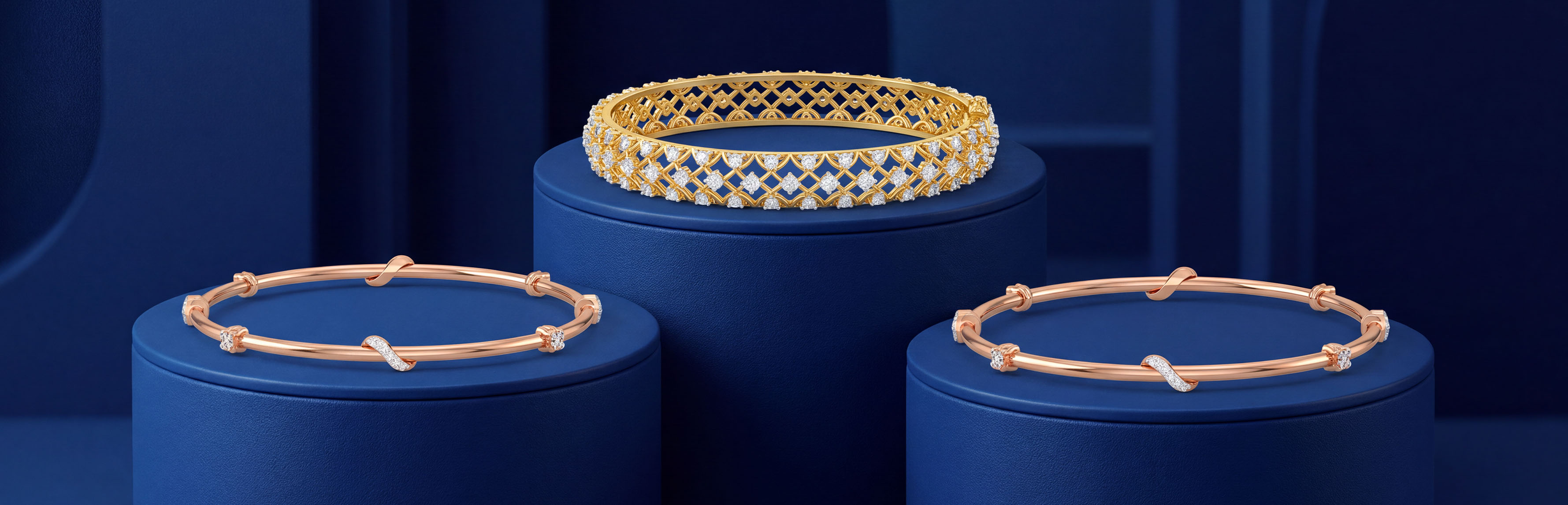
Celestia Flow Lab Grown Diamond Fancy Bangle
The pavé setting in this bangle sees diamonds arranged in a line with small prongs holding them.
Design Features to Note
The diamonds may be individually set but are part of a larger design where the diamonds form a complete element.
The designed elements are distributed evenly throughout the design.
Gleamwave Lab Grown Diamond Fancy Bangle
The luxurious bangle features over 100 diamonds set in a prong setting, with four round prongs securing each diamond in the bangle's open mesh metalwork.
Design Features to Note
The open meshwork design looks sophisticated and appealing, making it an appealing piece for special events.
The design cleverly fits more diamonds in without appearing overly detailed and heavy.
Final Thoughts
A diamond setting does more than hold diamonds in place in a piece of jewellery. It also affects how you wear the piece and how much maintenance it requires.
Whether you’re buying a ring, a necklace, or a pair of earrings, choose a diamond setting based on where you’ll wear it and how much upkeep you are comfortable with.
FAQs
What are the most common diamond setting types?
The most common diamond settings in jewellery are prong, bezel, channel, double prong, and bar settings.
Which diamond setting is suitable for everyday wear?
Various settings are appropriate for everyday wear and may depend on your style, comfort, and maintenance preferences.
Which diamond setting offers more protection for a diamond?
Generally, settings that cover more surface area or have the diamond sitting flush offer more protection than settings that cover less of the stone.
Does a diamond setting affect sparkle?
Yes, a diamond setting affects sparkle because it influences the amount of light that can pass through the diamond.
Which diamond setting is easiest to maintain?
Ease of diamond jewellery maintenance depends on many factors, and the setting alone can't influence how easy it is to clean a piece of jewellery.